
Introduction
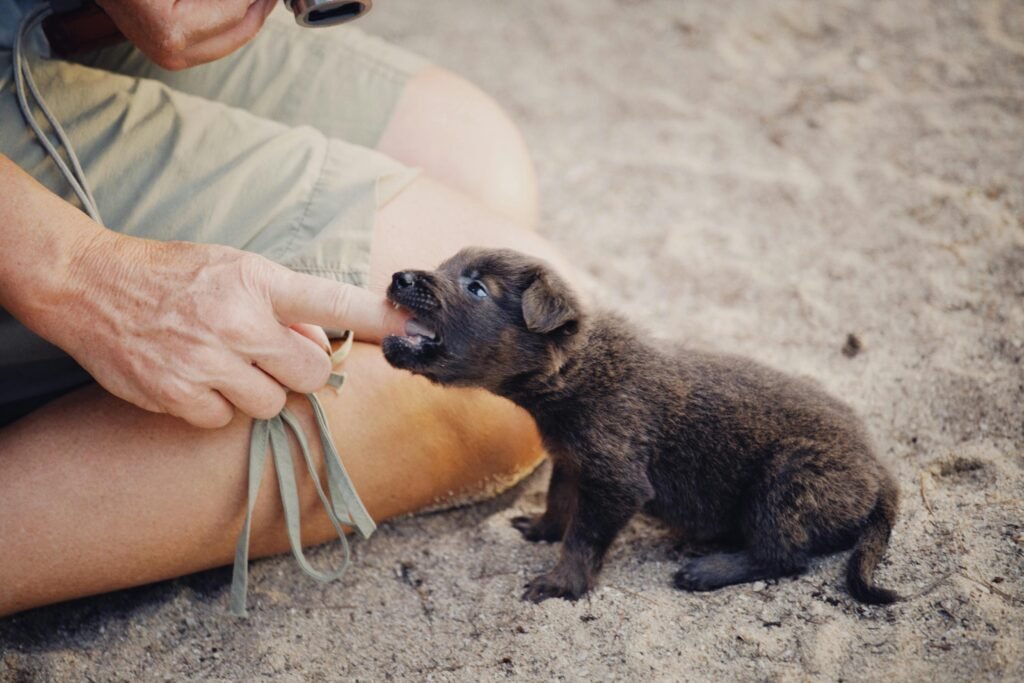
Those needle-sharp puppy teeth hurt! If your hands, ankles, and favorite pairs of shoes are currently covered in tiny puncture marks, take a deep breath. You do not have an aggressive dog; you just have a very normal puppy.
Puppies explore the world with their mouths. Between teething pain and their natural instinct to play-bite with their littermates, biting is their primary way of interacting. However, they need to learn that human skin is much more sensitive than another dog’s fur.
Here is exactly how to teach “bite inhibition” and stop the nipping using positive, fear-free methods.
1. The “Ouch!” and Freeze Method When puppies play together, if one bites too hard, the other will yelp and stop playing. This teaches the biter that hard bites end the fun. You need to mimic this!
- The second your puppy’s teeth touch your skin, say a sharp, high-pitched “Ouch!” or “Yip!”
- Immediately let your hand go limp. Stop moving completely.
- If the puppy stops biting and looks at you, praise them calmly and offer a toy instead.
2. The Reverse Time-Out (The Walk Away) If your puppy is over-excited and the “Ouch” doesn’t work (or if it makes them bite harder!), it is time to remove their favorite thing: your attention.
- Stand up quietly, turn your back, and cross your arms. Ignore them for 10-15 seconds.
- If they keep biting your ankles, step over a baby gate or leave the room completely for 30 seconds.
- When you return, act calm. If they bite again, leave again. Consistency is the key here. They will quickly learn that teeth on human skin means the human disappears.
3. Redirection: Give Them a Legal Target Your puppy needs to chew, especially when teething (between 3 to 6 months of age). You must provide acceptable alternatives.
- Keep a toy in your pocket or nearby at all times.
- When they come at your hands, intercept them by putting a chew toy in their mouth.
- Praise them enthusiastically when they chew the toy instead of you.
4. The Secret Weapon: Enforced Naps Is your puppy suddenly biting like a tiny shark, zooming around the room, and refusing to listen? They are probably overtired. Puppies need 18 to 20 hours of sleep a day. When they get exhausted, they lose all impulse control and become incredibly bitey, much like a toddler throwing a tantrum. Put them in their crate or a quiet, puppy-proofed room for a mandatory nap. You will be amazed at how gentle they are when they wake up!
What NOT to Do
- Never hit, tap their nose, or hold their mouth shut. This does not teach them not to bite; it teaches them to be afraid of your hands. A dog afraid of hands is much more likely to deliver a real, dangerous bite out of fear when they are older.
- Don’t play rough with your hands. If you use your hands as toys to wrestle with them, you cannot expect them to know the difference between “playtime hands” and “gentle hands.” Always use a toy to wrestle.
Consistency and patience are everything. Stick to these positive methods, and those needle teeth will soon be replaced by a dog with a soft, gentle mouth.