
Introduction
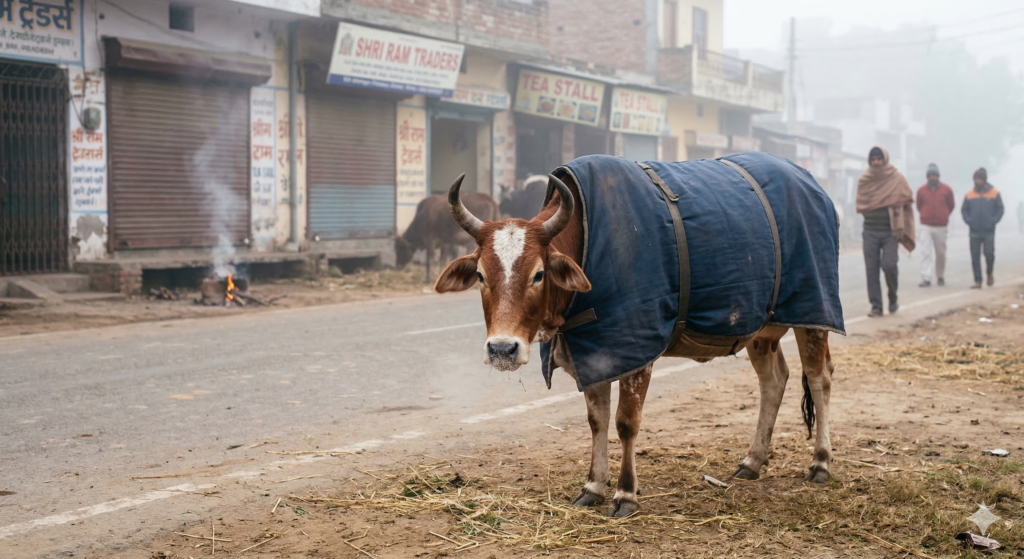
While cows are hardy animals, severe cold waves in northern India can be fatal, especially for young calves, older cows, and sick animals who cannot regulate their body temperature. Without the shelter of a barn, street cattle rely entirely on community compassion to survive the freezing nights.
The Power of the Jute Coat (Bori) The most effective and inexpensive way to keep a cow warm is a gunny bag (jute sack).
- Why Jute? Jute is breathable, retains body heat incredibly well, and unlike synthetic blankets, it is safe if the cow accidentally chews on it.
- How to Make One: Take two large, clean jute sacks. Stitch them together, leaving a wide opening for the head and tying straps under the belly. Local tailors will often do this for a negligible fee.
Dry Bedding is Crucial A cow loses massive amounts of body heat when forced to sleep on freezing, damp concrete. Providing dry bedding is essential.
- Coordinate with a local timber market to get sawdust, or buy cheap straw (parali).
- Spread a thick layer in an area where local cows normally sleep (like under a balcony or shed).
Winter Feeding Adjustments A cow’s body burns far more calories in the winter just trying to stay warm. Providing lukewarm drinking water (never ice cold) and high-energy foods like jaggery and roasted chickpeas (chana) can give them the caloric boost they need to survive the night.