
What Do I Do? (A First-Time Pet Parent’s Guide)
Oh, new pet parent, take a deep breath. We understand that knot of anxiety in your stomach. It’s completely natural to feel overwhelmed, especially when you’re trying your absolute best to care for a hungry, tiny creature, and then you discover something might not be quite right. Many first-time kitten parents, in their desire to help a hungry little one, reach for what seems like a natural solution: cow’s milk. Please know, you’re not alone, and it’s a very common misconception. We’re here to help you through this with clear, empathetic guidance.
My Kitten Drank Cow’s Milk – What to Do RIGHT NOW: Your 3-Step Action Plan
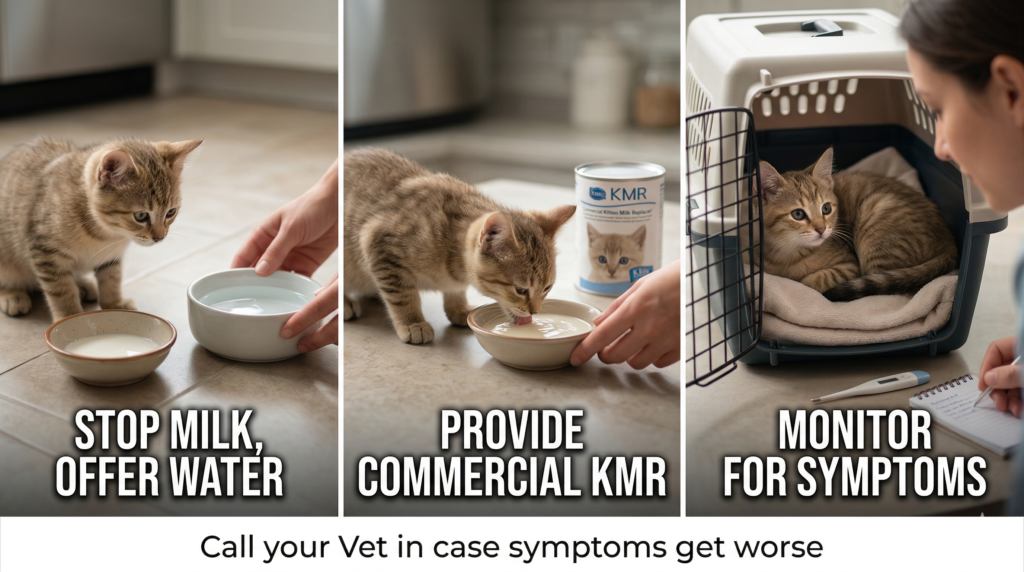
Let’s tackle this stress with clear, actionable steps:
- 1. Stop the Milk, Offer Water (Immediately!): The very first thing to do is to remove any cow’s milk and ensure your kitten doesn’t get any more. Dehydration is a major concern with stomach upset, so always provide a shallow, stable bowl of fresh, clean water. Encourage your kitten to drink, but don’t force it.
- 2. Provide an Appropriate Food Source:
- For very young kittens (under 4-5 weeks, or still nursing/bottle-feeding): If your kitten is still hungry, the safest and most appropriate option is a commercially available Kitten Milk Replacer (KMR). These are specifically formulated to meet a kitten’s nutritional needs and are lactose-free. You can usually find KMR at pet stores or online. Follow the mixing instructions carefully.
- For older kittens (weaned, eating solid food): If your kitten is already eating solid food, offer small amounts of a high-quality, easily digestible kitten-specific wet food. Avoid giving any more liquids other than water for a while, unless it’s KMR for a very young, still-nursing kitten.
- 3. Monitor Closely for Symptoms: Now it’s time to play detective. Watch your kitten for the next 12-24 hours for any of these signs:
- Diarrhea: How frequent? How watery? Is there any blood?
- Vomiting: How many times? Is it just milk or food?
- Lethargy or Weakness: Is your kitten less active than usual? Is it unresponsive?
- Loss of Appetite: Is your kitten refusing all food, even the appropriate options?
- Abdominal Pain: Is your kitten sensitive when touched on the belly, or crying?
When to Rush to the Vet: Absolute Emergency Signs
While a small amount of cow’s milk might just cause a mild tummy ache, certain symptoms demand immediate veterinary attention. Do not delay if you observe any of the following:
- Persistent or Severe Vomiting: If your kitten vomits more than 1-2 times, or if the vomiting is forceful and continuous.
- Severe, Watery, or Bloody Diarrhea: Especially if it’s constant, explosive, contains visible blood, or is very foul-smelling. This can lead to rapid dehydration.
- Extreme Lethargy and Weakness: If your kitten is completely unresponsive, limp, unable to stand, or seems disoriented.
- Signs of Dehydration: Sunken eyes, sticky or dry gums, or if the skin on their back doesn’t spring back quickly when gently pinched (skin tenting).
- Complete Loss of Appetite and Thirst: If your kitten refuses to eat or drink anything for more than a few hours, especially when combined with other symptoms.
- Any Concern with a Very Young Kitten: Kittens under 4-5 weeks old are incredibly fragile. Even mild symptoms can escalate quickly. If you have any doubt, it’s always safer to contact your vet immediately.
Why Cow’s Milk Isn’t Good for Kittens (The Simple Truth)
You might think milk is milk, especially for a baby animal, but a kitten’s digestive system is very different from a calf’s or even a human baby’s. Here’s the simple breakdown:
- Lactose Intolerance is Real: Most kittens are naturally lactose intolerant. This means they lack the specific enzyme, called lactase, needed to properly digest the sugar (lactose) found in cow’s milk. Think of it like trying to digest something your stomach just isn’t built for.
- Upset Stomachs and More: When a kitten drinks cow’s milk, that undigested lactose ferments in their intestines. This leads to common symptoms like diarrhea, vomiting, stomach pain, and general discomfort. While it’s generally not “poisonous” in a deadly sense, it can cause significant dehydration and nutrient loss, which is particularly dangerous for tiny, vulnerable kittens.
Pawsitive Hoomans is Here for You!
Remember, becoming a pet parent is a journey with lots of learning curves. We at Pawsitive Hoomans are dedicated to providing you with reliable, empathetic advice to help you and your furry family thrive. If you’re ever worried, even if the symptoms seem mild, don’t hesitate to call your veterinarian. They are your best resource for personalized advice regarding your kitten’s health. You’re doing great, and your kitten is lucky to have you!