
Help! My Dog Has Eye Discharge
We know that feeling all too well. One moment you’re basking in puppy snuggles, the next you spot something concerning – like discharge from your dog’s eye – and your mind immediately races to the worst-case scenario. Take a deep breath. At Pawsitive Hoomans, we understand that stress, and we’re here to help you navigate this common worry with clear, compassionate guidance. Spotting eye discharge can be alarming, but understanding the difference between white/clear and red discharge can help you decide your next steps.
Understanding Dog Eye Discharge: What’s Normal, What’s Not

Just like humans, dogs produce tears to keep their eyes lubricated and to flush out irritants. A small amount of clear, watery discharge, especially after a nap, can be perfectly normal. It might dry into a small crusty “sleepy dust” in the corner of their eye – totally okay! However, a sudden increase, a change in color, or other accompanying symptoms can signal an underlying issue.
White or Clear Eye Discharge: Often Less Alarming, But Still Watchful
When you see clear, watery discharge, or discharge that’s a milky white or greyish mucus, it often points to less severe issues. This type of discharge might look like:
- A thin, watery stream.
- A thicker, whitish-grey goo or crust that collects in the corner of the eye.
Common causes for white or clear dog eye discharge:
- Irritants or Allergies: Dust, pollen, smoke, or even a stray hair can irritate your dog’s eye, causing it to water more than usual. This is very similar to how our eyes water when we have allergies.
- Environmental Factors: Wind, dry air, or even certain household cleaners can cause mild irritation.
- Normal Tear Production: Some breeds, especially those with prominent eyes or short snouts (like Pugs or Bulldogs), naturally have more visible tear staining or discharge.
- Mild Conjunctivitis (Pink Eye): This inflammation of the eye’s lining can sometimes start with clear or whitish discharge before progressing.
- Blocked Tear Duct: If a tear duct is partially blocked, tears might overflow or collect more visibly.
While often less urgent, persistent white or clear discharge, especially if accompanied by squinting, pawing at the eye, or redness, still warrants a check-up with your vet.
Red or Bloody Eye Discharge: This is More Concerning
If you see discharge that is pinkish, reddish, or overtly bloody, it’s a sign that something more serious might be happening. This is generally more alarming and often requires prompt veterinary attention. Red eye discharge can appear as:
- A pink-tinged watery discharge.
- Streaks of red blood within clearer discharge.
- Obvious, bright red blood.
Potential serious causes for red or bloody dog eye discharge:
- Trauma or Injury: A scratch from a branch, a fight with another animal, or even rubbing their eye too hard can cause blood vessels to rupture.
- Foreign Object: A thorn, a piece of grit, or another object lodged in the eye can cause significant irritation and bleeding.
- Severe Infection: Bacterial or viral infections can cause severe inflammation and blood vessel damage, leading to bloody discharge.
- Corneal Ulcer: An open sore on the surface of the eye, which can be extremely painful and may lead to bleeding.
- Glaucoma: A serious condition characterized by increased pressure within the eye, which can cause pain, redness, and sometimes bloody discharge. This is an emergency.
- Bleeding Disorder: Rarely, systemic bleeding disorders can manifest with bleeding from the eyes.
Your 3-Step Action Plan: What To Do Right Now
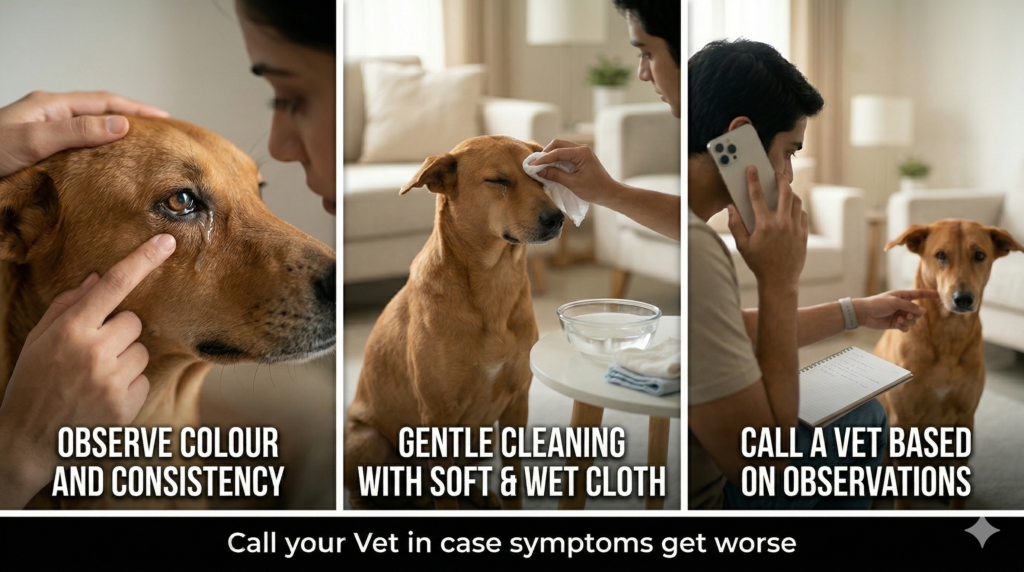
When you spot eye discharge, it’s natural to panic. But take a deep breath and follow these steps:
- Observe Carefully:
- Color and Consistency: Is it clear, white, grey, pink, or red? Is it watery, thick, or crusty?
- Amount and Frequency: Is it just a tiny bit, or a lot? Is it constant, or only after sleep?
- Other Symptoms: Is your dog pawing at their eye, squinting, or holding it shut? Does the eye itself look red, swollen, or cloudy? Is there any change in their vision or behavior (lethargy, loss of appetite)?
- Both Eyes or One? Discharge in one eye often points to a local issue, while discharge in both can sometimes indicate allergies or a systemic problem.
- Gentle Cleaning (If Safe and Clear):
- If the discharge is clear, watery, or a mild white crust, you can gently try to clean around the eye.
- Use a soft, clean cloth dampened with warm water.
- Wipe gently away from the eye, from the corner nearest the nose outwards.
- DO NOT try to clean if your dog is in pain, if there is obvious blood, or if you suspect a foreign object. You could cause more damage.
- Call Your Veterinarian:
- Based on your observations, call your vet’s office.
- Clearly describe what you’ve seen, including the color, consistency, amount, and any other symptoms.
- Your vet will advise you on whether it’s safe to monitor at home, if you need to schedule a non-urgent appointment, or if an immediate emergency visit is required.
When It’s an ABSOLUTE EMERGENCY: Go to the Vet IMMEDIATELY!
While some eye issues can wait, certain symptoms are red flags that demand immediate veterinary attention. Do not delay if you observe any of the following:
- Obvious Blood: Any discharge that is clearly red or pink-tinged blood.
- Sudden Onset of Severe Pain: Your dog is squinting uncontrollably, holding their eye shut, or yelping when you gently approach their face.
- Visible Injury or Trauma: You can see a cut, puncture, or foreign object (like a thorn or grass seed) in or around the eye.
- Sudden Swelling or Bulging of the Eye: The eye itself looks significantly larger or is bulging out.
- Cloudiness or Blue Haze Over the Eye: This can indicate a serious corneal issue or glaucoma.
- Rapid Changes in Vision: Your dog is bumping into things or seems disoriented.
- Extreme Redness: The white part of the eye (sclera) is bright red, not just a little pink.
- Discharge that is Yellow or Green: This almost always indicates a bacterial infection.
Your dog’s eyes are precious, and catching potential problems early can make all the difference. Remember, you are your dog’s best advocate. Trust your instincts, and when in doubt, always reach out to your veterinarian. They are there to help you give your furry family member the best possible care!