
Understanding Your Dog’s Unusual Sneezing Spells
When your dog is sneezing repeatedly, almost in a fit, and their tongue is sticking out, it’s their way of telling you something isn’t right. This combination often points to irritation or a potential obstruction in their nasal passages, throat, or even the back of their mouth. Think of it like a human trying desperately to clear something annoying from their nose or throat.
The sneezing is a reflex, an attempt to expel irritants from their nose. These irritants can be:
- Environmental Irritants: Dust, pollen, strong perfumes, cleaning product fumes, smoke, or even something as simple as a sudden blast of cold air.
- Allergies: Just like humans, dogs can develop allergies to environmental factors, certain foods, or even insects.
- Mild Upper Respiratory Irritation: Sometimes a minor cold or virus can cause this, similar to a human “tickle” in the nose.
The tongue sticking out part adds another layer. This isn’t usually just a funny quirk. It can indicate:
- Attempting to Clear Something: Your dog might be trying to lick or manipulate something that feels stuck in their mouth, throat, or nasal passages.
- Breathing Discomfort: If their nasal passages are truly blocked, they might instinctively try to breathe more through their mouth, causing the tongue to stick out.
- General Discomfort or Nausea: While less common with acute sneezing, a dog might stick out its tongue if feeling generally unwell or nauseous.
The most common and concerning cause for both symptoms together is often a foreign object. Things like a blade of grass, a small seed, or a dreaded foxtail can get lodged up a dog’s nose or in their throat, causing intense irritation and repeated attempts to dislodge it through sneezing and licking/tongue movement.
Your Clear 3-Step Action Plan
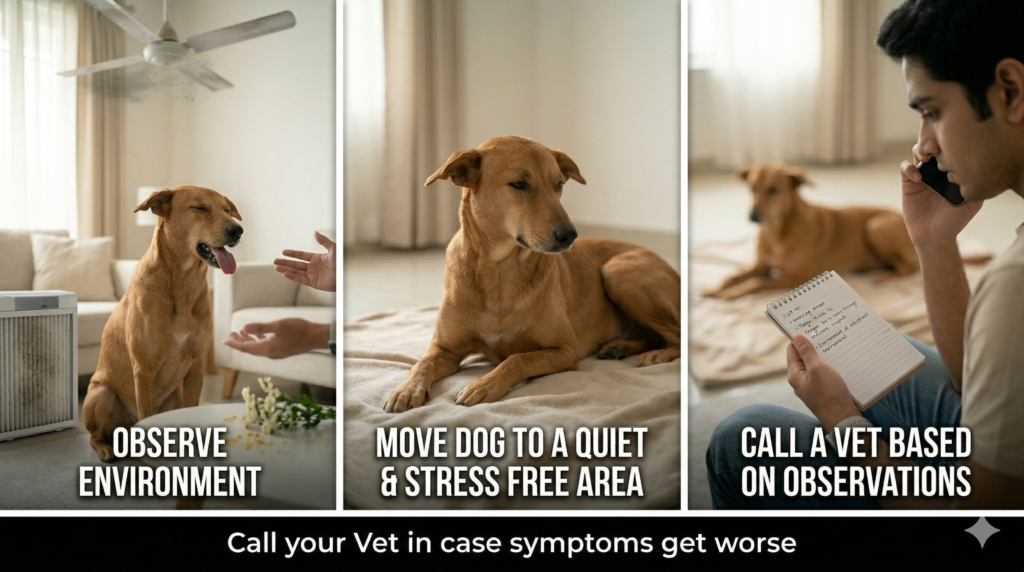
Here’s what you can do right now to help your stressed pup and get some peace of mind:
- Step 1: Observe Calmly and Assess the Situation.
- Environment Check: Remove your dog from the current environment if possible. Did they just sniff something unusual? Were you cleaning? Is there a lot of dust or pollen in the air?
- Brief Visual Check: If your dog allows without stress, gently try to look at their nose for any visible discharge (clear, yellow, bloody?), swelling, or anything obviously stuck. Can you see anything around their mouth or back of their throat if they open it easily? Do NOT try to pull anything out unless it’s clearly visible and easy to grasp without forcing.
- Note Down Details: How long has this been going on? Is it constant or intermittent? Are there any other symptoms (coughing, pawing at face, lethargy, loss of appetite)?
- Step 2: Provide Comfort and a Calm Space.
- Quiet Time: Move your dog to a quiet, stress-free area of your home. Loud noises or excitement can worsen their anxiety and symptoms.
- Fresh Water: Ensure they have access to fresh water. Gentle sips might help dislodge a minor irritant or soothe their throat.
- Avoid Further Irritants: Don’t use any strong sprays, air fresheners, or diffusers near your dog right now.
- Gentle Reassurance: Speak in a calm, soothing voice. Your calm demeanor will help your dog feel more secure.
- Step 3: Contact Your Veterinarian.
- When to Call: If the sneezing fits continue for more than a few minutes without relief, if they recur frequently over an hour or two, or if you notice any other concerning symptoms (see the emergency section below).
- What to Tell Them: Be prepared to describe exactly what you’re seeing: continuous sneezing, tongue sticking out, how long it’s been happening, and any other observations. This information helps your vet prioritize and advise you best.
When It’s an ABSOLUTE EMERGENCY to Go to the Vet IMMEDIATELY
While many sneezing episodes can resolve on their own, there are definite signs that indicate your dog needs urgent veterinary attention. Do not wait if you observe any of the following:
- Severe Difficulty Breathing: This includes gasping for air, labored breathing, or if their gums appear blue, purple, or very pale.
- Excessive Bleeding: Any significant blood coming from their nose or mouth.
- Persistent Choking or Gagging: If they are constantly pawing at their face, making repeated retching sounds, or seem unable to swallow.
- Sudden Swelling: If their face, muzzle, or throat begins to swell rapidly.
- Collapse or Severe Lethargy: If your dog suddenly becomes very weak, unresponsive, or collapses.
- Non-Stop Sneezing/Distress: If the sneezing fits are relentless, severe, and your dog is clearly in immense distress for more than 5-10 minutes without any relief.
- Known Toxin Exposure: If you suspect they have ingested or inhaled a toxic substance.
Your dog relies on you, and by reading this, you’re already doing an amazing job advocating for their health. Trust your instincts. If something feels off, it’s always best to err on the side of caution and reach out to your veterinarian. They are your best resource and partner in keeping your furry family member healthy and happy!