
The Foundation of Freedom: Why Recall Matters
As pet parents, we all dream of the ultimate scenario: walking through a scenic park or hiking trail with our furry best friend trotting happily by our side, off-leash and responsive to our every word. Achieving a reliable recall—or teaching your dog to come back every single time they are called—is perhaps the most important safety skill a dog can learn. It is not just about convenience; it is about protecting your pet from traffic, wildlife, and other unpredictable dangers. At Pawsitive Hoomans, we believe that the secret to a rock-solid recall isn’t about dominance or force; it is about building a relationship so rewarding that your dog simply cannot imagine being anywhere else but by your side.
Many pet parents struggle with recall because they inadvertently turn the ‘come’ command into a negative experience. Perhaps they only use it when it is time to leave the park, or worse, they get frustrated and scold the dog when they finally return after a long delay. To your dog, this teaches them that coming to you signals the end of fun or the beginning of a scolding. Research shows that dogs are highly associative learners, and the ‘come’ command needs to be the most positive, high-value word in their vocabulary.
The Pawsitive Hoomans Take
At Pawsitive Hoomans, our philosophy is rooted in radical empathy and positive reinforcement. We believe that recall is a conversation, not a demand. If you want your dog to choose you over a squirrel, a discarded sandwich, or another dog, you must prove that you are the most interesting, rewarding ‘thing’ in the environment. We strongly discourage the use of shock collars, leash jerks, or any form of punishment-based training. These tools damage the bond you have with your dog and can create anxiety, which often leads to further avoidance behavior. Instead, we champion a force-free approach that celebrates every success and turns every recall into a joyful reunion.
The One Small Change That Changes Everything
If you find that your dog ignores you when called, it is likely because the reward for staying away is greater than the reward for coming to you. One small change you can make today is implementing the ‘Jackpot Reward System.’ When practicing recall, never offer a standard piece of kibble. Instead, reserve high-value, ‘holy grail’ treats—like small pieces of boiled chicken, freeze-dried liver, or a dedicated ‘recall toy’ that only appears during training—exclusively for when they return to you. By changing the ‘payoff’ for the behavior, you change the dog’s motivation.
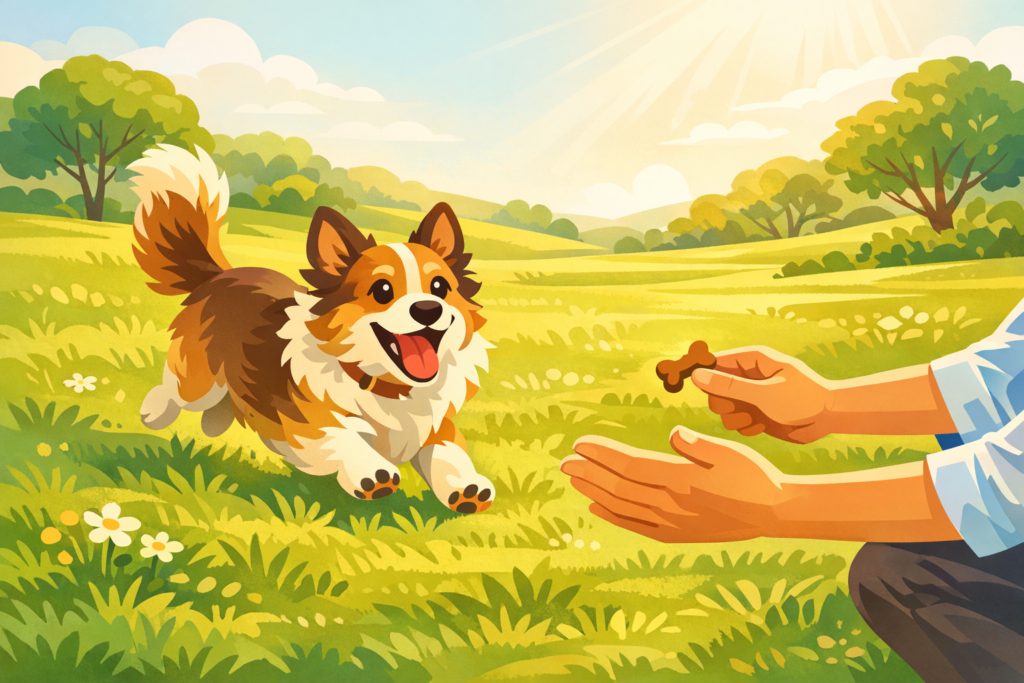
Furthermore, consider how you approach the recall. If you call your dog and then stand tall and stiff, you may inadvertently look like a threat or a boring obstacle. Try getting low to the ground, opening your arms, or even running a few steps in the opposite direction. This taps into your dog’s natural chase instinct and encourages them to follow you. Make it a game! When they reach you, don’t just grab their collar (which can feel like a restraint); instead, reward them, play for a moment, and then release them back to their exploration. This teaches them that coming to you isn’t the ‘end’ of their freedom, but rather a quick ‘check-in’ that earns them a treat and more freedom.
Building Distance and Distraction
Training should always start in a low-distraction environment, such as your living room or a quiet hallway. Once the behavior is solid in that space, slowly graduate to the backyard, then a quiet park. As pet parents, we often move too fast. If your dog doesn’t come when called at home, they definitely won’t come at a dog park filled with distractions. We recommend using a long-line leash (15 to 30 feet) during the transition phase. This allows your dog to experience the feeling of freedom while ensuring you have a safety tether to gently guide them back if they choose to ignore you. Never pull them in; instead, encourage them to follow you toward the ‘reward zone’ at the end of the line.
The ‘Don’t Chase’ Rule
One of the most critical mistakes in recall training is chasing your dog. If you chase them, they will naturally see it as a game and run faster. If your dog wanders off and refuses to listen, walk away from them in the opposite direction. Often, your dog’s natural desire to keep you in sight will override their interest in the environment. Once they start running toward you, praise them lavishly. This reinforces the idea that you are the anchor they should always return to.
Important Safety Considerations
While positive training is incredibly effective, we must always remember that all dogs have prey drive and unique temperaments. Never rely on off-leash recall in high-traffic areas or environments where your dog is not secure. Safety must always come first. If you notice your dog is displaying sudden behavioral changes or an inability to focus, it is crucial to consult your local veterinarian. Sometimes, medical issues such as discomfort, pain, or sensory loss (like hearing loss) can mimic disobedience or lack of focus. Always ensure your dog is in good physical health before assuming a recall issue is purely behavioral.
The Path to a Joyful Connection
Remember, your dog wants to be with you. By using positive reinforcement, understanding your dog’s natural instincts, and keeping the stakes high, you can build a recall that is reliable and, most importantly, fun. Whether you are working with a rescue pup or a senior dog, it is never too late to refine your communication and strengthen that bond. Be patient, be consistent, and keep those high-value rewards handy. With time and dedication, that dream of a reliable, off-leash companion can become your reality.
Disclaimer: This article is for educational purposes only and does not constitute veterinary or professional training advice. Every dog is an individual with specific needs. Please consult with a qualified veterinarian regarding your dog’s health, and consider working with a certified positive-reinforcement dog trainer if you are struggling with recall or other behavioral challenges.