
Dog Ate Raw Chicken Bones? Don’t Panic!
You just discovered your beloved furry family member might have gotten into some leftover raw chicken bones, and your mind is probably racing with “what if” scenarios. Your heart is likely pounding, and that feeling of anxiety is completely valid. As a first-time pet parent, it’s easy to feel overwhelmed by new situations, and we want you to know you’re not alone. Take a deep breath. We’re here to guide you through this, step by step, with calm and actionable advice.
Your Immediate 3-Step Action Plan: What To Do Right Now
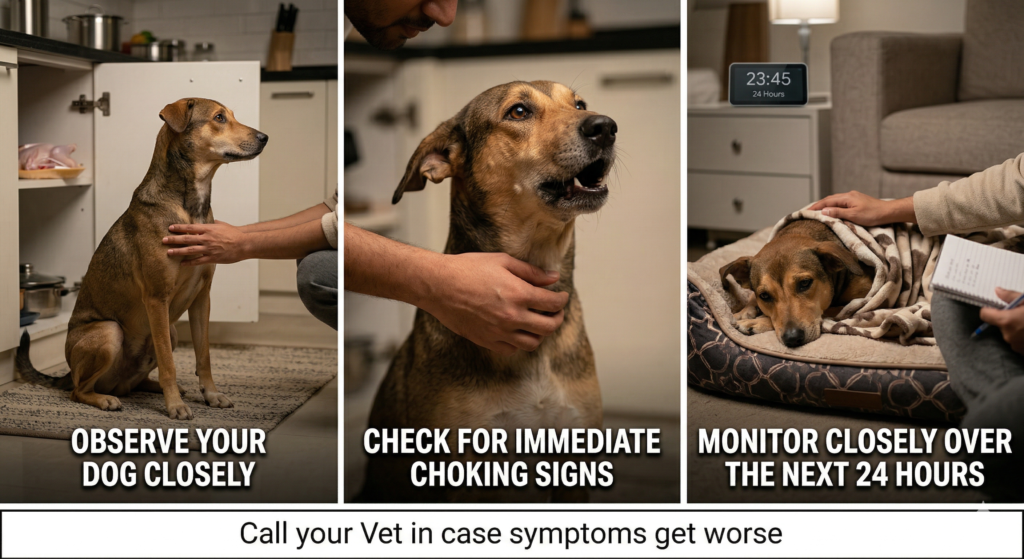
Your swift and calm actions are the most important thing. Here’s what you should do:
1. Stay Calm and Observe Your Dog Closely
- Your dog picks up on your stress, so try to remain as calm as possible. Panicking won’t help them, but a calm demeanor will help you think clearly.
- Watch for immediate signs of distress: Is your dog coughing, gagging, pawing at their mouth, drooling excessively, or showing difficulty breathing? These are signs of a potential choking hazard.
- If they seem normal right after ingestion, proceed to the next steps.
2. Check for Immediate Choking Signs (And How to Respond)
- If your dog is actively choking (gasping for air, blue gums, collapsing), this is an **absolute emergency**.
- If they are still conscious and standing:
- Try a finger sweep only if you can clearly see the bone fragment and safely remove it without pushing it further down.
- Perform the Heimlich maneuver for dogs. (A quick search for “dog Heimlich maneuver” on a reputable vet site can provide visual guides, but time is of the essence).
- Immediately transport them to the nearest emergency vet clinic.
- If they are not choking, but you suspect they might have swallowed bones, move to step 3.
3. Monitor Your Dog Closely Over the Next 24-72 Hours
Even if your dog seems fine initially, the risks of obstruction or internal injury can develop over time. Keep a vigilant eye out for any of these symptoms:
- Vomiting: Especially repeated vomiting, forceful vomiting, or vomiting with blood.
- Diarrhea: Severe diarrhea, bloody diarrhea, or black, tarry stools (which can indicate digested blood).
- Lethargy/Weakness: Your dog seems unusually tired, weak, or unwilling to move.
- Abdominal Pain: Whining when touched, a hunched posture, a distended or firm belly, or reluctance to be picked up.
- Changes in Appetite or Thirst: Refusing to eat or drink.
- Straining to Defecate: Or inability to pass stool.
- Restlessness or Whining: Indicating discomfort.
When It’s an ABSOLUTE EMERGENCY to Go to the Vet
If you observe ANY of the following symptoms, do not hesitate. Call your vet or your nearest emergency veterinary clinic immediately and head there as quickly as possible. Time is critical in these situations.
- Active choking or severe difficulty breathing.
- Persistent, repeated, or forceful vomiting (especially if blood is present).
- Severe lethargy, weakness, or collapse.
- Signs of significant abdominal pain (hunched posture, distended belly, whining when touched).
- Bloody diarrhea or black, tarry stools.
- Inability to pass stool or severe straining.
- Any symptom that makes you feel deeply concerned or indicates your dog is in severe discomfort.
Understanding the Concern: Why Raw Chicken Bones Can Be Tricky for Dogs
While some raw feeding diets incorporate specific types of raw bones, leftover raw chicken bones from your dinner plate can pose unique risks. Here’s a breakdown in simple terms:
- Choking Hazard: Even raw bones, especially smaller ones or fragments, can get lodged in your dog’s throat, causing them to choke.
- Internal Obstruction: If swallowed, larger pieces or specific shapes of bones might not pass through the digestive tract smoothly, leading to a blockage. This is particularly concerning for smaller dogs.
- Potential for Puncture or Irritation: Although raw bones are more pliable than cooked ones, they can still have sharp edges or points that could potentially irritate or even puncture the esophagus, stomach, or intestines as they move through.
- Bacterial Contamination: Raw chicken carries bacteria like Salmonella and E. coli, which can cause gastrointestinal upset (vomiting, diarrhea) in dogs, similar to humans.
Remember, pet parents, your intuition is powerful. If something feels off, it’s always best to err on the side of caution and consult with a veterinary professional. They are your best resource for ensuring your dog’s health and safety. You’re doing a great job by being proactive and seeking information. We’re Pawsitive Hoomans, and we’re here to support you every step of your pet parenting journey.