
Introduction
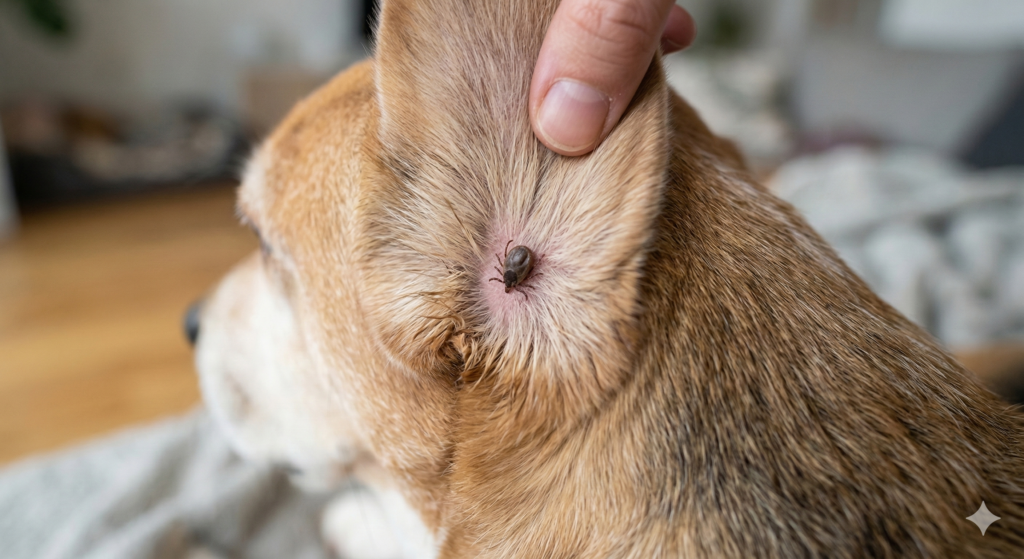
If you own a dog in India, ticks are public enemy number one. Especially during the summer and monsoon seasons, these tiny parasites hide in tall grass and latch onto your dog during walks.
While a tick bite is annoying, the real danger is what the tick leaves behind in your dog’s bloodstream: Tick Fever. This is a severe, potentially fatal blood infection (most commonly Ehrlichiosis or Babesiosis). Catching the signs early is the key to saving your dog’s life.
Top Symptoms of Tick Fever Tick fever symptoms can appear anywhere from a week to a month after the initial bite. Watch out for:
- Severe Lethargy: Your normally energetic dog suddenly refuses to get out of bed or go for a walk.
- Loss of Appetite: Complete disinterest in their favorite food or treats.
- High Fever: A noticeably hot nose and ears.
- Unexplained Bleeding: Nosebleeds, blood in their urine, or tiny purple/red bruising spots on their gums or belly (a sign of dangerously low platelets).
- Swollen Lymph Nodes: Lumps under their jaw or behind their knees.
What to Do If You Suspect Tick Fever Do not wait. Tick fever destroys red blood cells and platelets rapidly. Take your dog to the veterinarian immediately and ask for a Complete Blood Count (CBC) and a specific Tick Fever snap test. If caught early, it is highly treatable with a 3-to-4 week course of specific antibiotics (like Doxycycline).
How to Prevent Tick Fever Prevention is vastly cheaper and safer than the cure.
- Spot-On Treatments & Chews: Use vet-recommended monthly preventatives like Bravecto, NexGard, or Simparica. These kill ticks before they have time to transmit the disease.
- Daily Checks: After every walk, run your hands against the grain of your dog’s fur. Check their “hot spots”: inside the ears, between the toes, under the collar, and in the armpits.
- Keep Grass Short: If you have a garden, keep the grass trimmed short, as ticks love to climb tall blades of grass to jump onto passing animals.