
Understanding What’s Happening with Your Dog: Vomiting and Lethargy
When your dog is vomiting and acting lethargic, it means their body is actively fighting something off or struggling with an internal issue. These aren’t just minor symptoms; they are strong indicators that your dog needs attention.
- Vomiting: This is your dog’s body attempting to expel something that shouldn’t be there, or it can be a sign of irritation or illness in the digestive tract. It could be due to something simple like eating too fast or something more serious.
- Lethargy: This means your dog is unusually tired, sluggish, and has a lack of energy. They might not want to play, walk, or even lift their head. Lethargy often accompanies vomiting because their body is using all its energy to fight off illness or cope with pain.
Combined, these symptoms can point to a range of issues, from mild digestive upset to more serious conditions like infections, blockages, organ problems, or even poisoning. It’s impossible to know for sure without a vet’s examination, which is why action is so important.
Your 3-Step Action Plan: What To Do Right Now
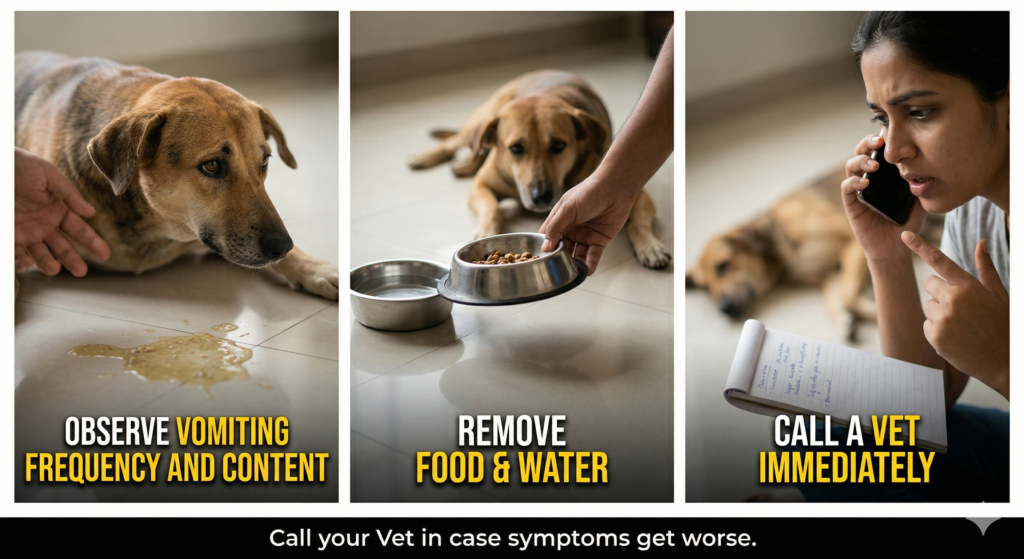
Here’s what you need to do immediately to help your sick dog and prepare for the next steps:
- Step 1: Observe Your Dog Closely & Gather Information.
- How often is your dog vomiting? Is it food, bile, or something else? Are there any foreign objects or blood?
- What is their energy level? Are they just a little tired or completely unresponsive?
- Are they drinking water? Can they keep water down, or do they vomit that too?
- Have they had any diarrhea? Any other symptoms like coughing, sneezing, or changes in urination?
- When did this start? Did they eat anything unusual recently?
- If applicable: If your dog was caring for kittens, are the kittens safe and warm? Do they have an alternative caregiver or source of warmth/nutrition while you focus on your dog?
Do NOT give any human medication without vet approval. Some common human medications can be toxic to dogs.
- Step 2: Remove Food and Limit Water.
- Food: Withhold food for at least 6-8 hours. This gives their digestive system a chance to rest.
- Water: If your dog is vomiting repeatedly, offering too much water at once can trigger more vomiting. Offer small sips (a tablespoon or two) every 15-30 minutes, rather than a full bowl. If they can keep these small sips down, you can gradually increase the amount.
- Step 3: Call Your Veterinarian IMMEDIATELY.
- Do not wait. Even if you think it might be minor, vomiting and lethargy together are serious. Call your vet’s office right away, explain your dog’s symptoms (vomiting, lethargy, and mention if the dog was a surrogate parent to kittens and can no longer care for them).
- Be prepared to answer the questions you gathered in Step 1.
- Your vet will advise you whether to bring your dog in for an immediate examination or if it’s safe to monitor them at home for a short period.
When It’s an ABSOLUTE Emergency: Go to the Vet NOW!
While you should always consult your vet when your dog is vomiting and lethargic, certain signs mean you absolutely cannot wait and must seek emergency veterinary care immediately. If you observe any of the following, do not delay – head to the nearest emergency veterinary clinic:
- Repeated vomiting with no relief, or vomiting blood.
- Your dog is trying to vomit but nothing is coming up (retching), especially if their abdomen looks bloated. This could be a sign of a life-threatening condition called bloat or Gastric Dilatation-Volvulus (GDV).
- Extreme lethargy, collapse, or unresponsiveness.
- Signs of severe pain (whimpering, hunched posture, sensitivity to touch).
- Known or suspected ingestion of toxins, foreign objects, or poisons.
- Pale gums, difficulty breathing, or seizures.
- Your dog has not kept any water down for several hours and is showing signs of dehydration (dry gums, skin elasticity test – pull up skin on their back, if it stays tented it’s a sign of dehydration).
- Your dog is a puppy, an elderly dog, or has a pre-existing health condition. These dogs can decline much faster.
- If your dog was acting as a surrogate for newborn kittens and is now too ill to care for them, the kittens’ lives are also at risk. This compounds the urgency for your dog’s treatment and finding immediate care for the kittens.
Looking Ahead: You’ve Got This
It’s incredibly tough being a first-time pet parent, especially when faced with a scary situation like this. Remember, you are doing a great job by being observant and seeking help. By taking these immediate steps, you are giving your dog the best chance for a quick recovery. Trust your instincts, and don’t hesitate to reach out to your veterinary team. They are there to support you and your furry family members.