
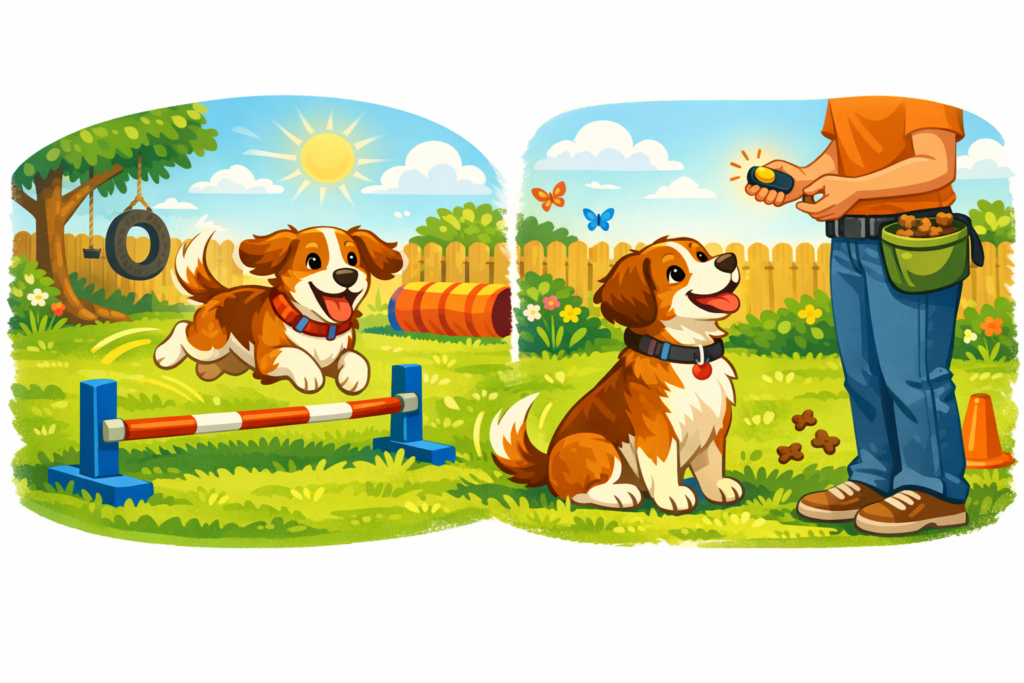
The Importance of Mental Enrichment Through Training
Training your canine companion is far more than just a way to show off at the park; it is a fundamental pillar of responsible dog ownership. As pet parents, we are always looking for ways to deepen the bond we share with our furry family members, and one of the most effective ways to do this is through trick training. Engaging your dog in complex maneuvers like the double dog trick—where your pet learns to navigate multiple steps or items in quick succession—provides essential cognitive stimulation. Research shows that mental exercise is often more tiring and satisfying for a dog than physical exercise alone, helping to curb unwanted behaviors rooted in boredom or frustration.
At Pawsitive Hoomans, we advocate for training sessions that are short, sweet, and entirely focused on positive reinforcement. By rewarding your dog for their efforts using high-value treats, praise, or play, you create a learning environment where your pet feels safe and motivated to explore new skills. It is important to remember that every dog learns at a different pace. If your dog seems confused or disengaged, take a step back and simplify the steps. Consistency and patience are the cornerstones of success in any training journey.
The Philosophy of Positive Reinforcement
When teaching your dog a sequence of movements, such as the components involved in a double dog trick, the methodology you choose matters immensely. We strongly discourage the use of punishment, fear, or any form of physical force. Instead, force-free training relies on the principle of operant conditioning, specifically using positive reinforcement to mark a correct behavior at the precise moment it happens. This could be the sound of a clicker or a consistent verbal marker like “Yes!” followed immediately by a reward.
By utilizing this technique, your dog learns that they have the agency to “earn” their rewards. This builds confidence in shy or anxious dogs and provides a structured outlet for high-energy breeds. When your dog successfully links two distinct behaviors together—such as jumping over a low hurdle and then retrieving a toy—they are essentially solving a puzzle. This builds “brain muscle” and helps your dog become a better, more focused learner in every other aspect of their life.
Breaking Down the Double Dog Trick
While the double dog trick can sound intimidating, it is essentially a game of chain training. Chain training involves teaching two or more separate behaviors and then linking them together into one fluid sequence. Before attempting this with your dog, ensure they have mastered the individual components. For instance, if the trick involves a crawl followed by a sit-pretty, do not try to teach the connection until your dog is 100% confident in the crawl and the sit-pretty individually.
Start by setting up a quiet environment with minimal distractions. Use a lure—a treat held in your hand—to guide your dog through the first movement. Once they complete it, mark the behavior, reward them, and then immediately prompt the second movement. Over time, you will fade the lure, meaning you will use your hand signals without holding a treat, rewarding only after the entire sequence is complete. This process encourages your dog to think ahead, anticipating the next move in the chain.
Safety First: Physical Considerations
Before beginning any new training routine that involves jumping, twisting, or rapid movement, it is vital to ensure your dog is physically capable of the task. As pet parents, we must always prioritize our dog’s long-term health. If your dog is a growing puppy, keep jumps extremely low to avoid putting unnecessary stress on developing growth plates. If your dog is a senior or has a history of joint issues like hip dysplasia or arthritis, stick to low-impact tricks that don’t involve high-intensity physical strain.
Disclaimer: Always consult a veterinarian or a certified canine rehabilitation professional before starting a new exercise regimen with your dog to ensure the movements are appropriate for their age, breed, and physical health status. Never force a dog into a position that causes them visible discomfort or pain.
The Pawsitive Hoomans Take
At Pawsitive Hoomans, we believe the best trick you can teach your dog is the trick of communication. The process of teaching a double dog trick is really a conversation. It requires you to observe your dog, listen to their body language, and adapt your approach to their unique personality. If your dog is having a bad day, don’t push it. Training should always end on a high note, even if that note is just a successful ‘sit’ before you put the treats away.
We are firm believers that all dogs—from those currently waiting for their forever homes in shelters to those already spoiled in our living rooms—deserve the time and attention it takes to train them. Training is a language of love. When you spend ten minutes a day teaching your dog something new, you aren’t just teaching a trick; you are saying, “I see you, I value you, and I love spending time with you.”
Troubleshooting Common Training Hurdles
If your dog is struggling to link two tricks, take a look at your reinforcement schedule. Are you rewarding frequently enough? Sometimes, when we move from one behavior to the next, we accidentally withhold rewards for too long, causing the dog to lose interest. Ensure that your reinforcement timing is sharp. If your dog is getting frustrated, it may be time to lower the criteria of the difficulty. Go back to basics for a session or two to rebuild their confidence. Remember, the goal is to make the process enjoyable, not to force a perfect performance. If the dog isn’t having fun, you aren’t doing it right!
Furthermore, consider your dog’s temperament. Some dogs are “workers” who love complex challenges, while others are “snackers” who prefer simple, high-reward tasks. Tailor your training style to suit your specific dog’s motivations. If your dog loses focus easily, keep sessions to three to five minutes, several times a day, rather than one long, taxing session. Above all, maintain your sense of humor. Your dog will pick up on your mood, and if you are stressed or impatient, they will likely become anxious too. Keep it light, keep it fun, and celebrate the small wins together.