
Understanding and Addressing Fleas in Cats
Finding a tiny, jumping pest on your beloved feline companion is every pet parent’s nightmare, but knowing how to treat cat flea infestation correctly can help you regain control of your home environment. At Pawsitive Hoomans, we understand that dealing with parasites can be stressful, especially in India’s humid climate where fleas thrive year-round. Whether you are caring for a rescued street cat or a pampered indoor kitty, keeping your feline happy and itch-free is essential. For comprehensive guidance on feline wellness, be sure to explore our dedicated cat-hub for expert-led tips on hygiene, nutrition, and parasite prevention.
A common misconception is that indoor-only cats are immune to fleas. In reality, fleas are expert hitchhikers. They can enter your home on your shoes, your clothes, or even through the small gaps in windows. Once they gain access, they reproduce rapidly, laying eggs in your carpets, upholstery, and pet bedding. Treating the infestation requires a multi-pronged approach that targets the life cycle of the flea, not just the adults you see jumping around.
The Life Cycle of a Flea
To effectively manage fleas, you must realize that the adult fleas you see on your cat represent only about 5% of the total infestation. The remaining 95% consists of eggs, larvae, and pupae hiding in your home’s environment. Because of this, simply bathing your cat is rarely enough. Research shows that breaking the life cycle involves treating the pet, the environment, and any other animals in the household simultaneously.
The Pawsitive Hoomans Take
At Pawsitive Hoomans, we are firm believers in proactive, stress-free care. When it comes to parasites, prevention is always easier and safer than cure. We advocate for the use of safe, vet-recommended topical preventatives rather than harsh chemical sprays or unverified home remedies. Many ‘natural’ solutions like essential oils can be highly toxic to cats, as their livers cannot process these compounds. Always consult your veterinarian before applying any product to your cat’s skin to ensure it is appropriate for their age, weight, and overall health status.
🏥 Is your pet showing these symptoms? Log them instantly in our free Triage Engine inside Pet Passport to get immediate guidance.
Environment Management: The Hidden Key
While you focus on your cat, the house must undergo a ‘deep clean.’ Vacuuming is your best friend. Vacuum all carpets, rugs, and furniture where your cat likes to lounge. After vacuuming, dispose of the vacuum bag or empty the canister outside immediately to ensure the eggs and larvae don’t survive inside. Wash all pet bedding, blankets, and your own bed linens in hot water, as high temperatures are effective at killing flea eggs.
Grooming and Mechanical Removal
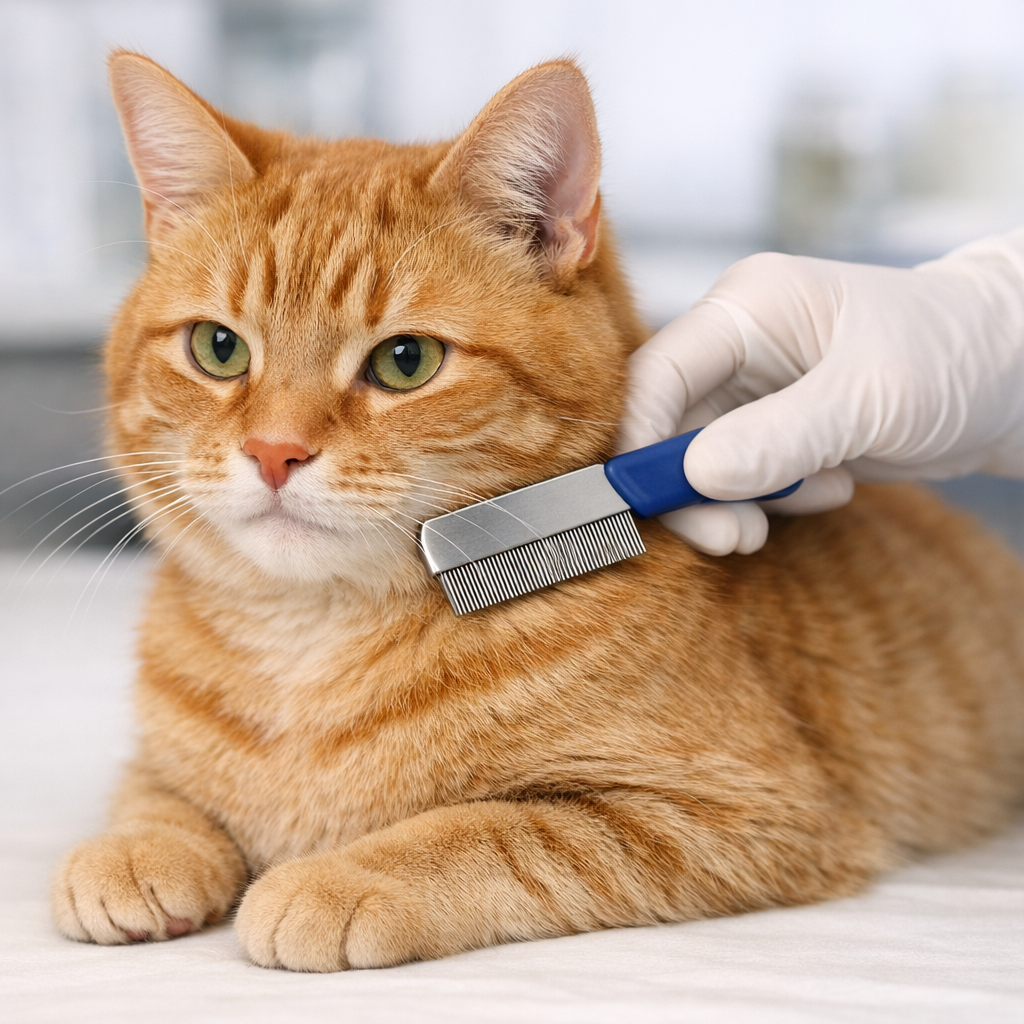
A fine-toothed flea comb is an invaluable tool for any cat parent. While it won’t clear an entire infestation, it is a great way to monitor the severity of the problem and manually remove adult fleas. Dip the comb in a bowl of soapy water after each stroke to trap the fleas. Ensure this process is done gently; if your cat becomes stressed or aggressive, stop immediately. Positive reinforcement with treats and calm talk can make this a more manageable experience for your furry friend.
When to Seek Professional Help
If you notice your cat is losing hair, has raw or bleeding skin, is acting lethargic, or has pale gums, please visit a clinic immediately. These can be signs of flea allergy dermatitis or even anemia caused by a severe flea burden. Never attempt to treat a kitten or a sick cat with over-the-counter pesticides without professional guidance, as they are significantly more sensitive to chemical toxicity.
Not sure what your pet needs? Use our free tools — Emergency Triage Guide or Custom Diet Calculator.
Frequently Asked Questions
Can I use dog flea shampoo on my cat to save money?
No, you should never use dog flea shampoo on a cat because most dog products contain permethrin, which is highly toxic and often fatal to cats. Always use products specifically labeled for feline use, and verify with your veterinarian that the product is safe for your cat’s specific life stage and weight.
How long does it take to get rid of fleas completely?
It typically takes at least three months of consistent treatment to fully clear an infestation. This duration is necessary to ensure you have broken the flea life cycle, which includes eggs and pupae that can remain dormant in the environment for several weeks before hatching.
Are there natural home remedies like neem oil that are safe for cats?
Neem oil and many other essential oils can be dangerous for cats if not properly formulated or if used in incorrect concentrations, often leading to drooling, tremors, or skin irritation. Avoid home-brewed remedies and instead utilize reliable flea management by documenting your cat’s health history in their pet-passport/ to keep your vet informed and ensure you are using medically approved, cat-safe preventatives.
Disclaimer: We are passionate pet advocates, not veterinarians. The information provided here is for educational purposes only and does not replace professional veterinary advice, diagnosis, or treatment. Always consult with a qualified veterinarian regarding your pet’s health, especially before administering any medications or treatments.