
Introduction: Expanding Your Feline Family
Welcoming a second feline friend into your home is an exciting milestone, but it requires patience and a strategic plan to ensure harmony. As pet parents, we all dream of our cats becoming best friends who spend their afternoons curled up together. However, cats are territorial creatures by nature, and the process of introducing a cat to a new cat requires a slow, structured approach to avoid unnecessary stress. If you are preparing to bring a new companion home, our cat hub is the perfect place to start gathering resources for a smooth transition. Creating a positive experience right from the start is the key to a lifetime of companionship.
Research shows that cats thrive on routine and predictability. Abruptly placing two strange cats in the same room is a recipe for anxiety and potential conflict. Instead, we advocate for a gradual introduction method that allows both residents and newcomers to adjust to each other’s scents and presence without feeling threatened. This process can take anywhere from a few days to several weeks, depending on the individual personalities of your pets. Always remember to prioritize force-free methods that build confidence rather than fear.
Setting Up the Foundation: The Safe Haven
Before your new cat arrives, designate a “base camp” room. This should be a quiet, comfortable space equipped with all the essentials: a litter box, food and water bowls, a scratching post, and a soft bed. For the first few days, the new cat should stay in this room exclusively. This allows the newcomer to acclimate to their new environment while the resident cat becomes accustomed to the presence of a new “intruder” through the door without direct visual contact.
During this stage, engage in scent swapping. You can rub a soft cloth on the new cat’s cheeks and place it near the resident cat’s food bowl, and vice versa. This helps both cats associate the other’s scent with positive experiences, like mealtime. If you notice any signs of extreme distress—such as hissing, growling, or hiding for extended periods—simply slow down the process and keep the barrier in place for a few more days.
The Pawsitive Hoomans Take
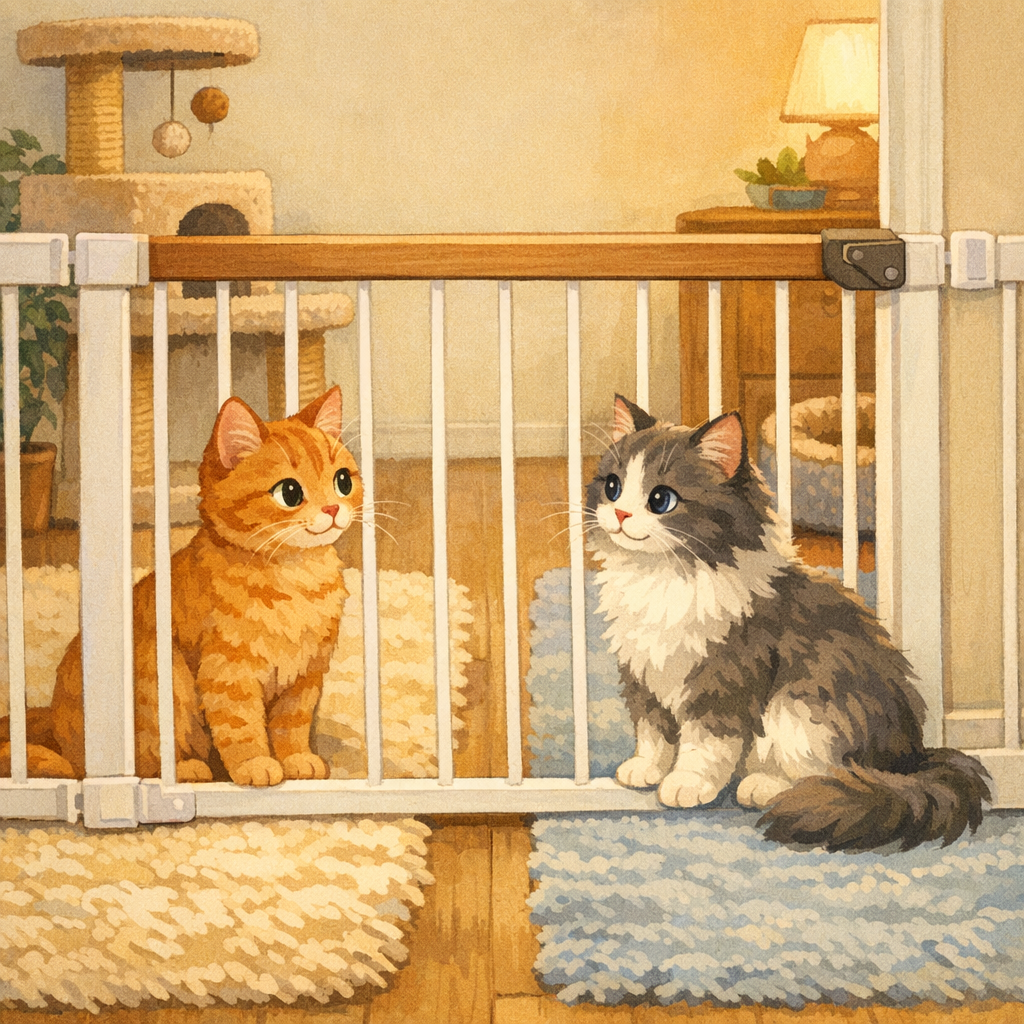
At Pawsitive Hoomans, we believe that the secret to a successful introduction is respecting the feline hierarchy. Cats are not naturally social in the way humans or dogs are; they are solitary hunters who have evolved to be highly sensitive to changes in their territory. As pet parents, it is our job to be the mediator. We strongly encourage focusing on parallel play—where both cats play with toys simultaneously on either side of a closed door or a baby gate. This reinforces the idea that the presence of the other cat leads to fun, high-reward activities. Never force a physical interaction; allow the cats to decide when they are ready to bridge the distance.
🐾 Keep a complete health record for your pet with our free Pet Passport. Track vaccinations, weight and behaviour in one place.
Gradual Visual Exposure
Once both cats appear relaxed and exhibit curiosity rather than aggression toward the door, it is time for visual interaction. Using a sturdy baby gate or a screen door allows them to see each other safely while keeping them physically separated. Feed them their favorite treats while they are in sight of one another. This technique, known as counter-conditioning, changes the emotional response of the cat from “threat” to “opportunity for snacks.” If at any point the interaction leads to intense staring, low growling, or swatting, calmly distract them and end the session. It is always better to have shorter, successful sessions than one long, stressful one.
The First Face-to-Face Meeting
When you finally allow the cats to be in the same space, ensure the area is “catified”—meaning there are plenty of vertical spaces, such as cat trees or shelves, where they can retreat if they feel overwhelmed. Do not intervene unless there is a true physical fight. It is normal for there to be some posturing or a few hisses; this is how they negotiate their boundaries. If the cats interact peacefully, reward them with high-value treats and gentle, calm praise. For an exact daily portion of treats during these training sessions, use the free Cat Diet Calculator at PawsitiveHoomans.com to keep your feline’s weight in check.
Not sure what your pet needs? Use our free tools — Emergency Triage Guide or Custom Diet Calculator.
Conclusion: Long-Term Harmony
Patience is your greatest tool when integrating a new cat. By taking the time to introduce them properly, you are setting the stage for a harmonious relationship. Remember that every cat is an individual, and some will bond quickly while others may choose a peaceful coexistence where they simply respect each other’s space. As you navigate these new dynamics, keep track of their behavioral milestones using your Pet Passport to ensure you are monitoring their comfort levels accurately over time.
Frequently Asked Questions
How long does it take for two cats to stop fighting?
It typically takes between two weeks to three months for two cats to stop fighting and settle into a peaceful, stable relationship. While some cats may bond within a few days, others need several months of consistent positive reinforcement and gradual exposure to feel comfortable sharing territory. Always monitor the interaction closely for signs of chronic stress or physical injury.
What should I do if my cats are hissing at each other?
Ignore minor hissing as long as there is no physical violence, as this is how cats communicate boundaries and personal space. Hissing is a defensive, verbal warning rather than an act of aggression; if you see this, calmly redirect the cats to separate areas or initiate a play session to break the tension without scolding them, which could make them associate the other cat with punishment.
Can I leave two cats alone together after only a few days?
No, you should never leave two cats unsupervised in the same room until you have observed at least one full week of positive, conflict-free interactions while you are present. It is safest to keep them separated by a door or a crate when you are not home to prevent accidental fights or injury until you are absolutely certain they have established a stable social bond.
Disclaimer: Pawsitive Hoomans is a resource for pet care information and does not provide veterinary medical advice. Always consult with a qualified veterinarian or a certified feline behaviorist regarding medical concerns, aggressive behavior, or health issues concerning your pet.