
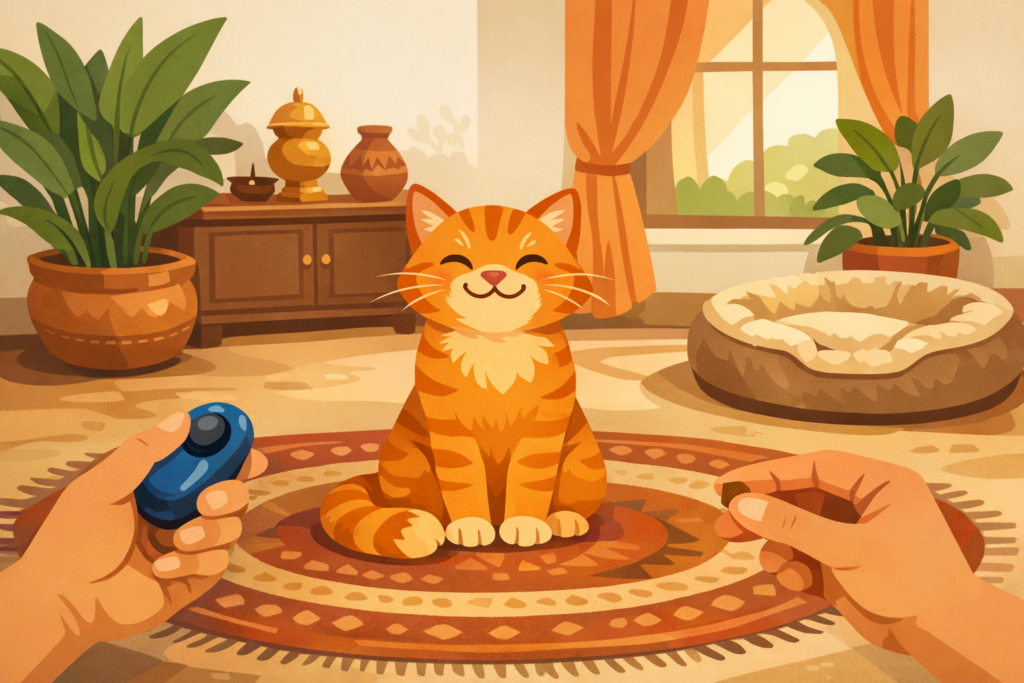
Understanding the Power of Clicker Training for Cats
As dedicated pet parents, we are always looking for ways to enrich the lives of our feline companions. When it comes to clicker training for cats, many people are surprised to learn that our independent, graceful friends are not only capable of learning new skills but often thrive on the mental stimulation it provides. At Pawsitive Hoomans, we believe that training is about communication, bonding, and building confidence. By exploring our comprehensive cat hub, you can find various resources designed to help your feline friend live their happiest, healthiest life.
Clicker training is a form of positive reinforcement that utilizes a distinct sound—the ‘click’—to mark the exact moment your cat performs a desired behavior. This sound acts as a bridge, telling the cat, ‘Yes, that is exactly what I wanted, and a reward is coming!’ Because cats are highly food-motivated, this system is incredibly effective for encouraging behaviors like coming when called, sitting, or even jumping onto a stool on command.
The Pawsitive Hoomans Take
At Pawsitive Hoomans, our philosophy is rooted in the belief that training should never be about coercion or fear. We advocate strictly for force-free, positive reinforcement methods. When you use clicker training, you are creating a language between yourself and your cat. It empowers them to make choices that lead to positive outcomes rather than fearing punishment. This approach is especially vital in multi-cat households or for cats that may be timid or anxious. By focusing on rewarding the ‘yes’ moments, we nurture a relationship built on mutual trust and respect rather than compliance through pressure. Remember, every cat learns at their own pace, and patience is the most important tool in your kit.
🐾 Keep a complete health record for your pet with our free Pet Passport. Track vaccinations, weight and behaviour in one place.
How to Get Started with Clicker Training
To begin, you will need a clicker (or a pen that makes a sharp ‘click’ sound) and high-value treats. In India, many pet parents find success using small pieces of freeze-dried liver or plain boiled chicken as rewards. The process is simple: charge the clicker. This means you click and immediately provide a treat. Repeat this about 10–15 times so your cat understands that the sound of the click always precedes a tasty snack. Once they associate the click with food, you are ready to start marking specific behaviors.
Keep training sessions short—five minutes is plenty. Cats have short attention spans and can easily become frustrated if sessions drag on too long. Aim for these short bursts once or twice a day to maintain interest without causing fatigue. Always end on a positive note, even if you are just rewarding a small step toward the goal.
Building Consistency and Patience
Consistency is key when learning new behaviors. If you are teaching your cat to ‘high-five,’ wait for the natural movement where they lift a paw, click, and treat. Do not force their paw; simply reward the natural movement until they realize they can trigger the click themselves. This is the beauty of clicker training; it turns your cat into an active problem-solver.
It is important to remember that if your cat seems stressed, hides, or avoids the training area, take a step back. Training should be a highlight of their day, not a chore. If you find your cat struggling to understand a specific trick, you might be asking for too much too quickly. Break the behavior down into smaller, more manageable steps. If you are unsure about whether a certain treat is safe or appropriate for your cat’s specific dietary needs, please consult with your veterinarian before introducing new foods into their routine.
Not sure what your pet needs? Use our free tools — Emergency Triage Guide or Custom Diet Calculator.
Frequently Asked Questions
Is it really possible to train an Indian stray cat using a clicker?
Yes, any cat regardless of their origin can be trained using positive reinforcement and a clicker. The key is to find a high-value treat that is irresistible to your specific cat, which might be a tiny piece of fish or a commercial cat treat, and ensuring they feel completely safe in their environment before you begin training.
Can I use a phone app as a clicker instead of a physical tool?
Yes, you can use a free clicker app on your smartphone, but many pet parents find that a physical clicker is easier to handle because it provides a consistent, sharp sound and fits comfortably in your hand while you manage treats with the other.
How many treats should I give my cat during a training session?
You should aim for 5 to 10 tiny, pea-sized treats per five-minute session to avoid overfeeding and keep your cat motivated. For managing your cat’s health and tracking their progress, you can record their training milestones and monitor their overall weight trends using the Pet Passport tool.
Disclaimer: The information provided here is for educational purposes only and is not a substitute for professional veterinary advice. Always consult with a qualified veterinarian regarding your pet’s medical care, dietary requirements, or behavioral concerns before starting any new training program.