
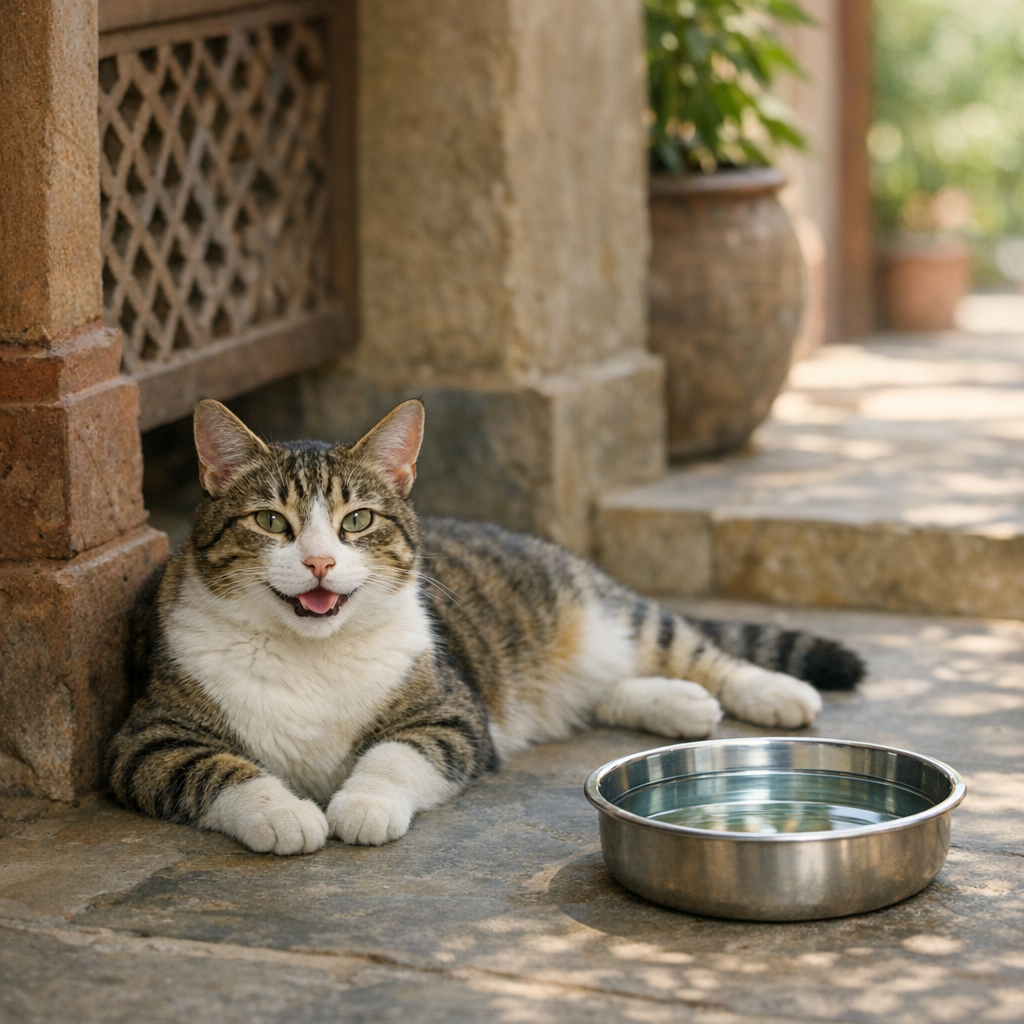
Understanding the Risk of Cat Heat Stroke in India
As summer temperatures soar across India, our feline companions are particularly vulnerable to the sweltering heat. Preventing cat heat stroke in India is a top priority for responsible guardians, especially given the rising intensity of heatwaves. Unlike humans, cats don’t sweat to cool down; instead, they rely on panting and grooming, which become significantly less effective in high-humidity environments. Whether you are navigating the scorching summers in Delhi or the humid coastal heat of Mumbai, understanding how to keep your cat cool is essential for their safety. For more general guidance on keeping your feline family member thriving, you can explore our comprehensive cat-hub resources.
Heat stroke is a serious, life-threatening medical emergency. It occurs when a cat’s body temperature rises above its normal range, typically 100.5°F to 102.5°F. When temperatures exceed this for too long, vital organ function can be compromised. Recognizing the signs early—such as rapid, shallow breathing, bright red gums, lethargy, or stumbling—is the first step toward prevention. Veterinary experts recommend keeping a close watch on your cat during the peak afternoon hours when the sun is at its most intense.
The Pawsitive Hoomans Take
At Pawsitive Hoomans, we believe that proactive environment management is the key to a happy, healthy summer. We emphasize creating ‘cool zones’ within your home. This could mean moving your cat’s bed to a tiled or marble floor, which naturally stays cooler, or providing elevated beds that allow for better air circulation. We strongly discourage keeping cats outdoors during the summer months in India. The risk of heat-related illness increases exponentially when a cat is confined to a balcony, terrace, or parked car. Always ensure your home has adequate cross-ventilation, and consider using fans or air conditioning during the hottest parts of the day. Remember, if your home is too warm for you, it is definitely too warm for your cat.
🏥 Is your pet showing these symptoms? Log them instantly in our free Triage Engine inside Pet Passport to get immediate guidance.
Hydration Strategies for Summer
Water is the most important tool in your arsenal against heat stroke. Cats can be notoriously picky about their water sources, often preferring running water over stagnant bowls. To encourage hydration, try placing multiple bowls of fresh, cool water around the house. You can even add a few ice cubes to their water bowl to keep the temperature down during the day. If your cat enjoys wet food, consider adding a little extra water to their meals to increase their overall fluid intake. For those wondering how much hydration is enough, remember that monitoring their weight and water intake is vital. Use our free tool to track these metrics so you can catch any changes early; you can manage these trends through your Pet Passport dashboard.
Managing Grooming and Activity
While many cat owners think shaving their long-haired cat is the answer to the Indian heat, it is actually a common misconception. A cat’s coat acts as natural insulation, protecting them from both heat and sunburn. Instead of shaving, focus on frequent, gentle brushing to remove loose undercoat, which promotes better airflow near the skin. Additionally, keep play sessions short and schedule them during the early morning or late evening hours when the temperature is naturally lower. Engaging in high-energy play during the mid-afternoon can quickly lead to an overheated cat.
Not sure what your pet needs? Use our free tools — Emergency Triage Guide or Custom Diet Calculator.
Frequently Asked Questions
Can I give my cat ice cubes to help them stay cool?
Yes, adding one or two ice cubes to your cat’s water bowl is a safe and effective way to lower the temperature of their water, encouraging them to drink more. Ensure the bowl is heavy enough that it doesn’t tip over easily, and always provide a non-chilled water source nearby in case your cat prefers the room-temperature option.
What are the immediate signs that my cat is suffering from heat stroke?
Immediate signs include rapid, heavy panting, dark red or purple gums, excessive drooling, a hot-to-the-touch body, uncoordinated movement, and sudden collapse or seizure. If you notice any of these, move your cat to a cool, shaded area immediately, apply cool (not freezing) water to their paw pads and ears, and transport them to a veterinarian without delay.
Should I keep my cat in an AC room during Indian summers?
Yes, keeping your cat in an air-conditioned or well-ventilated room is highly recommended during the peak heat hours of 11:00 AM to 4:00 PM. Cats thrive in consistent, moderate temperatures, and preventing exposure to extreme outdoor heat is the most effective way to avoid heat-related illness in the Indian climate.
Is it safe to wet my cat’s fur to keep them cool?
It is generally better to use a damp towel to gently pat their paw pads, ears, and underbelly rather than soaking their entire coat. Many cats find being fully wet stressful, which can increase their heart rate and body temperature, so focus on cooling the extremities where their body heat naturally dissipates.
Disclaimer: Pawsitive Hoomans is a resource for pet care information and advocacy, not a substitute for professional veterinary advice. Always consult with a qualified veterinarian regarding your cat’s health, emergency symptoms, or medical decisions.