
Understanding Your Cat’s Needs
Managing a diagnosis of feline chronic kidney disease (CKD) can feel overwhelming for any cat parent, but with the right approach, you can significantly improve your companion’s quality of life. At Pawsitive Hoomans, we understand that nutrition is the cornerstone of managing this condition effectively. Whether you are navigating this journey with a senior rescue or a younger cat, exploring the nuances of a cat kidney disease diet is the most impactful step you can take. To ensure your feline friend has all the support they need throughout their life stages, we encourage you to explore our comprehensive cat-hub/ for resources on overall well-being and health maintenance.
Kidney disease, often referred to as chronic kidney disease or renal insufficiency, occurs when the kidneys lose their ability to filter waste products from the blood efficiently. While we aren’t veterinarians, we know from veterinary research that a therapeutic diet is frequently the first line of defense recommended by experts to slow the progression of the condition and manage uncomfortable symptoms like nausea and lethargy.
The Core Principles of a Kidney-Friendly Diet
When you sit down with your veterinarian to discuss your cat’s specific dietary needs, you will likely hear about three critical adjustments: phosphorus restriction, high-quality protein moderation, and increased moisture intake. These are the three pillars of a kidney-supportive nutritional plan.
1. Phosphorus Restriction
Phosphorus is a mineral found in many common pet food ingredients. In a healthy cat, the kidneys filter out excess phosphorus. However, when kidneys are impaired, phosphorus levels in the blood rise (hyperphosphatemia), which can lead to further damage and make your cat feel generally unwell. A therapeutic diet for kidney disease is formulated to be strictly limited in phosphorus to prevent this buildup.
2. High-Quality, Moderate Protein
There is a common misconception that cats with kidney issues should have zero protein. This is inaccurate. Cats are obligate carnivores and require protein to maintain muscle mass. The goal of a kidney disease diet is not the removal of protein, but the restriction of waste byproducts (urea) that result from protein metabolism. Veterinary-prescribed renal diets use highly digestible, “high-value” proteins that provide the necessary amino acids while minimizing the burden on the kidneys.
3. The Vital Importance of Hydration
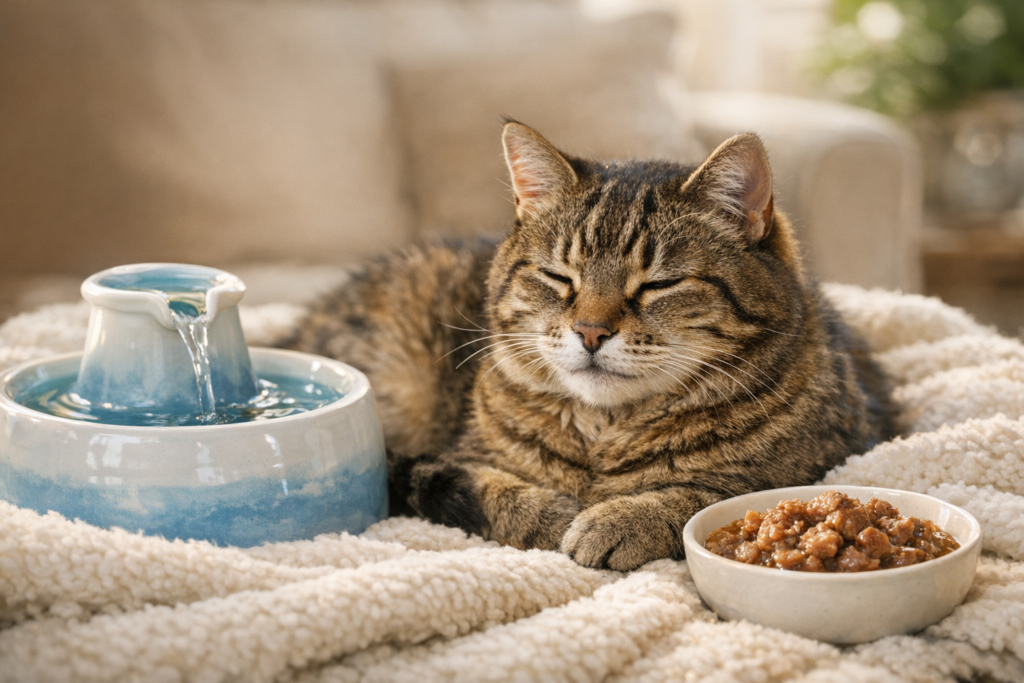
Hydration is perhaps the single most important factor in managing kidney health. Because compromised kidneys struggle to concentrate urine, cats with CKD lose water rapidly. Wet food is almost always preferred over dry kibble for this reason, as it provides a constant source of hydration. Always ensure your cat has access to fresh, clean water, and consider using a pet fountain to encourage them to drink more frequently.
The Pawsitive Hoomans Take
At Pawsitive Hoomans, we believe that managing a cat with CKD is about “quality over quantity”—both in terms of their diet and their daily interactions. A positive environment, combined with consistent monitoring, allows your cat to thrive even with a diagnosis. We always advocate for a force-free, gentle approach to feeding. Never force your cat to eat a new diet; instead, transition them slowly over 7 to 10 days by mixing the new food with their previous meal. If your cat stops eating, it is vital to contact your veterinarian immediately, as cats can quickly develop secondary issues if they go without food for extended periods.
🏥 Is your pet showing these symptoms? Log them instantly in our free Triage Engine inside Pet Passport to get immediate guidance.
Not sure what your pet needs? Use our free tools — Emergency Triage Guide or Custom Diet Calculator.
Frequently Asked Questions
Is curd or homemade food safe for my cat with kidney disease?
Homemade diets are generally not recommended for cats with kidney disease unless they are formulated by a board-certified veterinary nutritionist, as balancing phosphorus and protein levels at home is extremely difficult. Curd (yogurt) is typically high in phosphorus and should be avoided unless specifically cleared by your veterinarian as part of a medically managed plan. Attempting to manage kidney disease through “kitchen recipes” can often lead to dangerous nutrient imbalances.
How can I get my picky cat to eat a prescription renal diet?
You can encourage your cat to accept a new renal diet by warming the food slightly to enhance its aroma or by adding a small amount of warm water to create a “gravy” texture. Many cats with kidney issues struggle with appetite due to nausea; if your cat is refusing the renal diet, consult your veterinarian about appetite stimulants or anti-nausea medications before giving up on the diet entirely. Consistency and patience are key during the transition phase.
How much water should a cat with kidney disease drink daily?
While there isn’t a single universal number, a cat with kidney disease should ideally drink more than the standard 45-60ml per kg of body weight to compensate for fluid loss. If you notice your cat is drinking significantly more or less than their baseline, track these changes diligently. For an exact daily portion and hydration tracking tailored to your cat’s specific health profile, use the resources available in your Pet Passport to monitor their health trends accurately.
Disclaimer: Pawsitive Hoomans is an informational platform, not a substitute for professional veterinary advice, diagnosis, or treatment. Always consult with a qualified veterinarian regarding your pet’s health, diet, and any medical conditions. Never ignore professional veterinary advice or delay seeking it because of something you have read here.