
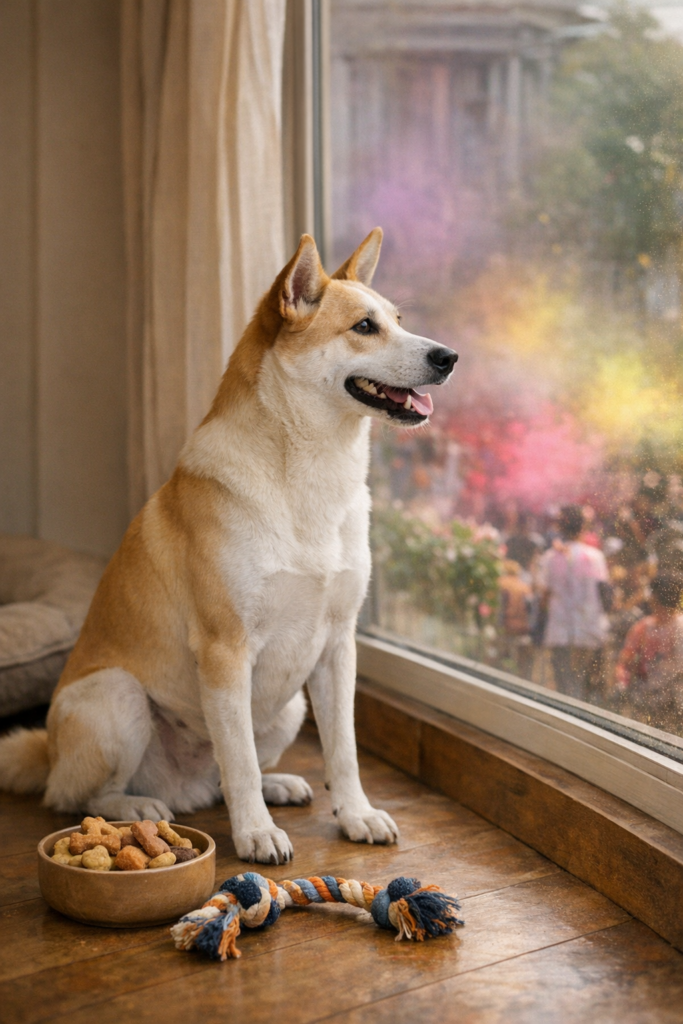
Understanding Holi Colours Dog Safety in India
Holi is a vibrant festival of colours, joy, and community, but for those of us living with our furry companions, it brings a specific set of challenges. As we prepare for the festivities, ensuring Holi colours dog safety becomes a top priority for every responsible owner. Dogs rely on their keen sense of smell and their skin to navigate their world, and the chemical-laden powders often sold in local markets can be highly irritating or even toxic if ingested or absorbed through the skin. Whether you are navigating the busy streets or hosting a gathering at home, our comprehensive dog care resources are designed to help you keep your pet comfortable during these noisy, high-energy celebrations.
Many commercially available Holi colours, or ‘gulal,’ contain synthetic dyes, heavy metals like lead or mercury, and abrasive particles like crushed glass or mica. When these substances come into contact with a dog’s sensitive paws, nose, or eyes, they can lead to severe dermatitis, allergic reactions, or respiratory distress. As pet parents, we must adopt a protective stance during the festive season to ensure our dogs remain safe and stress-free.
Identifying the Risks of Synthetic Holi Colours
The primary concern regarding Holi colours dog safety is the chemical composition of the powders. Many cheap, synthetic colours are not designed for biological contact and can cause significant health issues. If a dog licks their paws after walking through a space where colours have been played, they risk ingesting these harmful chemicals. This can lead to vomiting, lethargy, and in extreme cases, internal toxicity. Furthermore, the fine dust particles can easily enter a dog’s respiratory tract, triggering sneezing, coughing, or even asthmatic episodes, especially in breeds with shorter muzzles like Pugs or Shih Tzus.
The Pawsitive Hoomans Take
At Pawsitive Hoomans, we believe that the best way to celebrate Holi with your dog is to opt for a ‘colour-free’ approach. We strongly advocate for keeping dogs indoors during the peak hours of community play, especially in areas where chemical colours are being thrown freely. While it might be tempting to include your dog in the festivities, the noise, the crowds, and the presence of toxic dyes pose an unnecessary risk. Instead, focus on enriching their environment indoors with their favourite toys or engaging scent games. If you feel compelled to mark the occasion, stick to pet-safe, natural, or edible colours, though even these should be used sparingly and only if you are certain your pet has no allergies.
🏥 Is your pet showing these symptoms? Log them instantly in our free Triage Engine inside Pet Passport to get immediate guidance.
Practical Tips for a Safe Celebration
Preparation is key to maintaining Holi colours dog safety. Start by grooming your dog a few days before the festival so that any loose fur is removed, which might otherwise trap colour particles. If your dog must go for a walk during the festive window, use protective dog boots. These provide a physical barrier between your pet’s sensitive paw pads and the residual colours on the ground. Immediately after a walk, wipe down your dog’s paws and belly with a damp, fragrance-free cloth to remove any potential contaminants.
If you suspect that your dog has come into contact with synthetic Holi colours, do not panic. Avoid using harsh chemicals or human-grade shampoos to scrub the colour off, as these can strip the natural oils from their skin and exacerbate irritation. Instead, consult a veterinarian if you notice redness, swelling, or persistent scratching. For an accurate, personalized medical history, ensure you track these incidents in your digital pet health records to monitor long-term trends or recurring allergies.
Not sure what your pet needs? Use our free tools — Emergency Triage Guide or Custom Diet Calculator.
Frequently Asked Questions
Are synthetic Holi colours toxic if my dog licks them?
Yes, synthetic Holi colours are toxic if ingested and can cause vomiting, diarrhea, and potential organ distress. Many low-quality powders contain heavy metals and dyes that are not safe for internal consumption, so it is vital to keep your dog away from areas where colours have been played and ensure their paws are wiped clean after any outdoor time.
How can I protect my dog’s fur and skin from Holi colours?
Applying a light, even coat of pure, food-grade coconut oil to your dog’s coat before taking them outside can create a protective barrier. This makes it significantly easier to brush off colour particles and prevents the dyes from staining or irritating the skin, while also keeping the fur moisturized.
What should I do if my dog gets colour in their eyes or ears?
Immediately rinse the affected area with plenty of clean, lukewarm water and contact your veterinarian without delay. Never attempt to use eye drops or ointments you have at home without professional veterinary guidance, as you risk causing further injury to the delicate tissues of the eyes and ears.
Disclaimer: Pawsitive Hoomans is an educational platform, not a medical facility. The content provided is for informational purposes only and does not replace professional veterinary advice, diagnosis, or treatment. Always seek the advice of your qualified veterinarian with any questions you may have regarding your pet’s medical condition. Never disregard professional veterinary advice or delay in seeking it because of something you have read on this website.