
Understanding Your Dog Upset Stomach Diet Needs
As dedicated pet parents, there is nothing quite as stressful as seeing our furry companions suffer from digestive distress. Whether it is loose stools, vomiting, or general lethargy, navigating a dog upset stomach diet requires patience, observation, and a gentle approach. At Pawsitive Hoomans, we understand that our pets are family, and their health is our top priority. If you are looking for more guidance on general wellness for your canine companion, head over to our dog-hub/ for comprehensive tips on keeping your pup happy and healthy every single day.
It is important to remember that digestive issues in dogs can range from simple dietary indiscretion—like eating something they shouldn’t have found on a walk—to more serious underlying health conditions. Before you change anything in your pet’s routine, it is essential to observe their behavior. Are they still energetic? Are they drinking water? A sudden change in diet should always be approached with caution and, whenever possible, under the guidance of your local vet.
The Role of Bland Diets in Digestive Recovery
When a dog has an upset stomach, their gastrointestinal (GI) tract is essentially inflamed or irritated. Just like humans might reach for toast or crackers after an illness, dogs often benefit from a temporary, easily digestible diet. Veterinary experts recommend a bland diet to provide necessary nutrition without overworking the stomach and intestines. This allows the gut lining to heal while minimizing the production of excess gas or diarrhea.
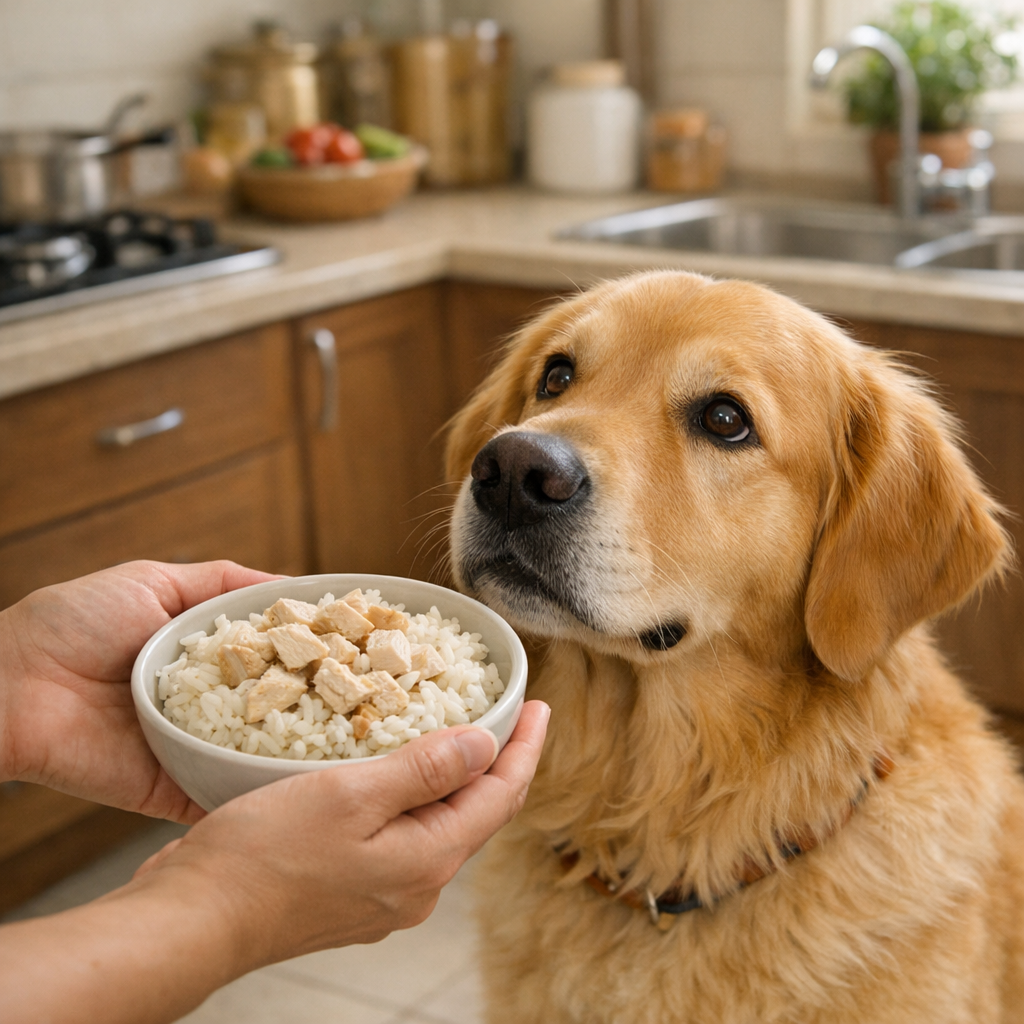
In the Indian context, a common and effective approach involves using simple, wholesome ingredients. Boiled, skinless chicken breast shredded into small pieces, mixed with plain white rice, is the gold standard for a temporary bland diet. The key here is simplicity. No spices, no oils, no onions, and certainly no garlic. For an exact daily portion tailored to your dog’s weight, use the free Dog Diet Calculator at pawsitivehoomans.com/dog-diet/.
The Pawsitive Hoomans Take
At Pawsitive Hoomans, we believe in a holistic, force-free approach to pet parenting. We advocate for preventative care and proactive monitoring rather than waiting for emergencies to escalate. A dog upset stomach diet is not a long-term solution; it is a “reset button” for your dog’s digestion. If you notice blood in the stool, constant retching, or if your dog is completely refusing water, please skip the home remedies and head straight to a veterinary clinic. Your pet’s intuition often tells us when something is truly wrong, so always trust your gut as a parent, but verify with a professional.
⚖️ Track your pet’s weight and diet using our free Pet Passport Dashboard. Monitor trends before they become emergencies.
Transitioning Back to Normal Food
Once your dog’s stools have normalized and their energy levels have returned, do not rush to dump their regular kibble or wet food back into their bowl. A sudden switch can trigger a secondary upset. Veterinary experts suggest a gradual reintroduction over 3 to 5 days. Start by mixing 25% of their regular food with 75% of the bland diet, then slowly increase the proportion of their regular meal while decreasing the bland portion. This gives their gut flora a chance to adjust to the reintroduction of fiber and complex nutrients.
Hydration is Non-Negotiable
During an episode of vomiting or diarrhea, dogs lose fluids at an alarming rate. Dehydration can happen very quickly, especially in smaller breeds or puppies. Always ensure fresh, clean, filtered water is available. If your dog is reluctant to drink, some parents find success offering small amounts of lukewarm chicken broth (ensure it is strictly homemade, containing no onion, garlic, or salt). If your pet is not drinking water for more than 12 hours, this is a clear sign that they require professional veterinary intervention.
Not sure what your pet needs? Use our free tools — Emergency Triage Guide or Custom Diet Calculator.
Keeping a regular log of your pet’s dietary habits and any episodes of illness is the best way to help your veterinarian diagnose recurring issues. You can start building a health history for your dog by using our digital health tracker, which allows you to note down exactly what your dog ate and how they reacted to it, making it easier to identify potential food sensitivities in the future.
Frequently Asked Questions
Can I give my dog curd and rice for an upset stomach?
Yes, plain, unsweetened, and unflavored curd mixed with well-cooked white rice is often recommended as a gentle, probiotic-rich meal for a dog with mild digestive upset. Curd acts as a natural source of beneficial bacteria that can help soothe the intestinal tract, provided your dog is not lactose intolerant, which is common in many adult dogs.
How long should I keep my dog on a bland diet?
A bland diet should typically be fed for 3 to 5 days until your dog’s bowel movements return to a normal consistency and their appetite is fully restored. If you do not see significant improvement within 48 hours, or if the symptoms worsen, it is time to consult a veterinarian, as persistent digestive issues can indicate underlying infections or parasites.
Is it okay to starve my dog for 24 hours if they have diarrhea?
For adult dogs in good body condition, a short 12 to 24-hour period of restricted feeding (but never restricted water) can sometimes help settle an irritated stomach, but this should only be done if your dog is otherwise alert and hydrated. Never withhold food from puppies, senior dogs, or dogs with underlying health conditions like diabetes, as they require consistent energy intake to remain stable.
Disclaimer: We are passionate pet advocates, not veterinarians. The information provided here is for educational purposes and should not replace professional veterinary advice. Always consult your veterinarian before making significant changes to your pet’s diet, especially if they are exhibiting symptoms of illness.