
Understanding Gastric Dilatation-Volvulus (GDV)
As dedicated pet parents, we always want the best for our furry companions, ensuring they stay happy, healthy, and safe. When it comes to canine health, understanding the critical signs of bloat in dogs symptoms is perhaps one of the most life-saving pieces of knowledge you can possess. Bloat, medically known as Gastric Dilatation-Volvulus (GDV), is a condition where the stomach fills with gas, fluid, or food and then twists on itself. This is a true emergency that requires immediate professional intervention. For more comprehensive resources on keeping your canine companion thriving, visit our dog-hub to learn about everything from exercise to preventative care.
In India, where we have a beautiful mix of breeds and resilient indie dogs, it is vital to recognize that bloat does not discriminate. While deep-chested breeds like Great Danes, German Shepherds, and Labradors are often cited as being higher at risk, any dog can experience this condition. Because the stomach twist cuts off blood flow to vital organs and traps gas, time is of the essence. At Pawsitive Hoomans, we advocate for being prepared, observant, and proactive about your dog’s physical state.
Identifying the Early Signs of Bloat
The challenge with bloat is that it can progress incredibly quickly—sometimes within a matter of minutes or a few hours. Early detection can be the difference between a successful recovery and a tragic outcome. You should watch for a sudden, marked change in your dog’s behavior immediately after eating, running, or drinking a large amount of water.
Common clinical signs that warrant an immediate trip to an emergency facility include:
- Non-productive retching: This is a classic sign. Your dog may attempt to vomit but nothing comes up, or only small amounts of white, frothy saliva appear.
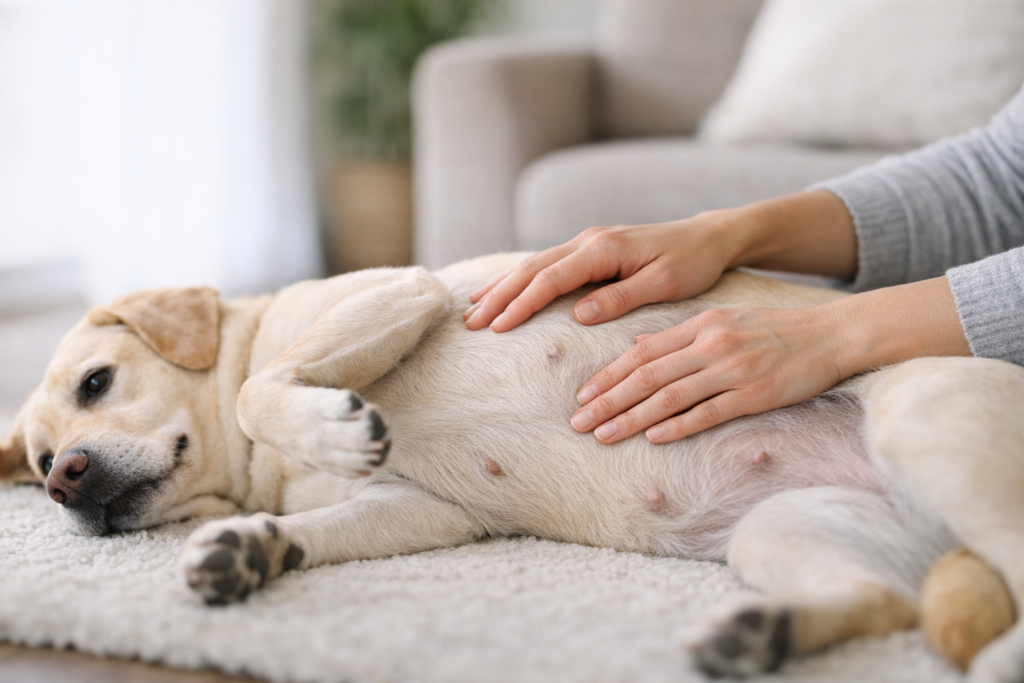
- Distended or hard abdomen: If you gently touch your dog’s belly and it feels tight like a drum or unusually firm, this is a major warning signal.
- Restlessness and pacing: An affected dog will likely be unable to settle. They might pace constantly, whine, or appear intensely uncomfortable and distressed.
- Heavy panting and drooling: Excessive salivation and rapid, shallow breathing indicate that your dog is in significant pain or shock.
- Weakness or collapse: If your dog is struggling to stand or appears lethargic suddenly, seek emergency care without delay.
The Pawsitive Hoomans Take
At Pawsitive Hoomans, we believe that education is the most powerful tool for every pet parent. While we never want to live in a state of constant worry, being ‘intuitively aware’ of your dog’s normal routine allows you to spot abnormalities before they escalate. We strongly support a low-stress lifestyle, balanced nutrition, and gentle, consistent exercise. We also believe that your bond with your dog is your best asset—if your gut tells you something is wrong, trust it. Always consult a qualified veterinarian for any medical diagnosis; never attempt to treat a suspected case of bloat at home with home remedies, as this condition requires mechanical decompression by a professional.
🏥 Is your pet showing these symptoms? Log them instantly in our free Triage Engine inside Pet Passport to get immediate guidance.
Prevention Strategies for Pet Parents
While not all cases of bloat are preventable, certain lifestyle adjustments can help reduce the risks. Veterinary experts often suggest spreading your dog’s daily food intake into two or three smaller meals rather than one large, heavy serving. For an exact daily portion tailored to your dog’s weight, use the free Dog Diet Calculator at pawsitivehoomans.com/dog-diet/.
Additionally, avoid high-intensity exercise or rough play immediately before or after a meal. Giving your dog at least an hour to digest quietly can make a significant difference. Ensure they have constant access to fresh water, but discourage gulping, especially after intense heat exposure. If you have a fast eater, consider using a slow-feeder bowl to encourage a more mindful eating pace, which minimizes the amount of air swallowed during meals.
Not sure what your pet needs? Use our free tools — Emergency Triage Guide or Custom Diet Calculator.
Conclusion
Staying informed is the cornerstone of responsible pet guardianship. By keeping a vigilant eye on your dog’s digestion and energy levels, you are already ahead of the curve. Remember, keeping your dog’s medical history updated in your Pet Passport can provide your veterinarian with crucial information during an emergency. Always act quickly if you suspect something is wrong—your speed and calm demeanor will be your dog’s greatest strength in a time of crisis.
Frequently Asked Questions
Can a dog get bloat if they only eat home-cooked food?
Yes, any dog can experience bloat regardless of their diet, including those fed home-cooked meals. While the composition of the diet plays a role, the speed of eating and the volume of food consumed are often bigger factors; feeding smaller, more frequent meals can help reduce this risk.
How long should I wait after my dog eats to play?
You should wait at least 60 to 90 minutes after your dog eats before engaging them in high-intensity exercise or rough play. This resting period allows the stomach to begin the digestive process properly, significantly reducing the risk of a stomach torsion.
Is it normal for a dog’s belly to be hard after a big meal?
No, your dog’s belly should not be hard or drum-like after eating a normal meal. While a full stomach causes mild expansion, a hard, painful, or distended abdomen is a major warning sign of distress and should be evaluated by a veterinarian immediately.
Disclaimer: I am a pet care advocate, not a veterinarian. This content is for educational purposes only and does not constitute medical advice, diagnosis, or treatment. Always seek the advice of your veterinarian or other qualified health provider with any questions you may have regarding a medical condition. Never disregard professional medical advice or delay in seeking it because of something you have read on Pawsitive Hoomans.