
Last checked against the sources below on 23-10-2026. This is general information; see your vet if your dog seems unwell.
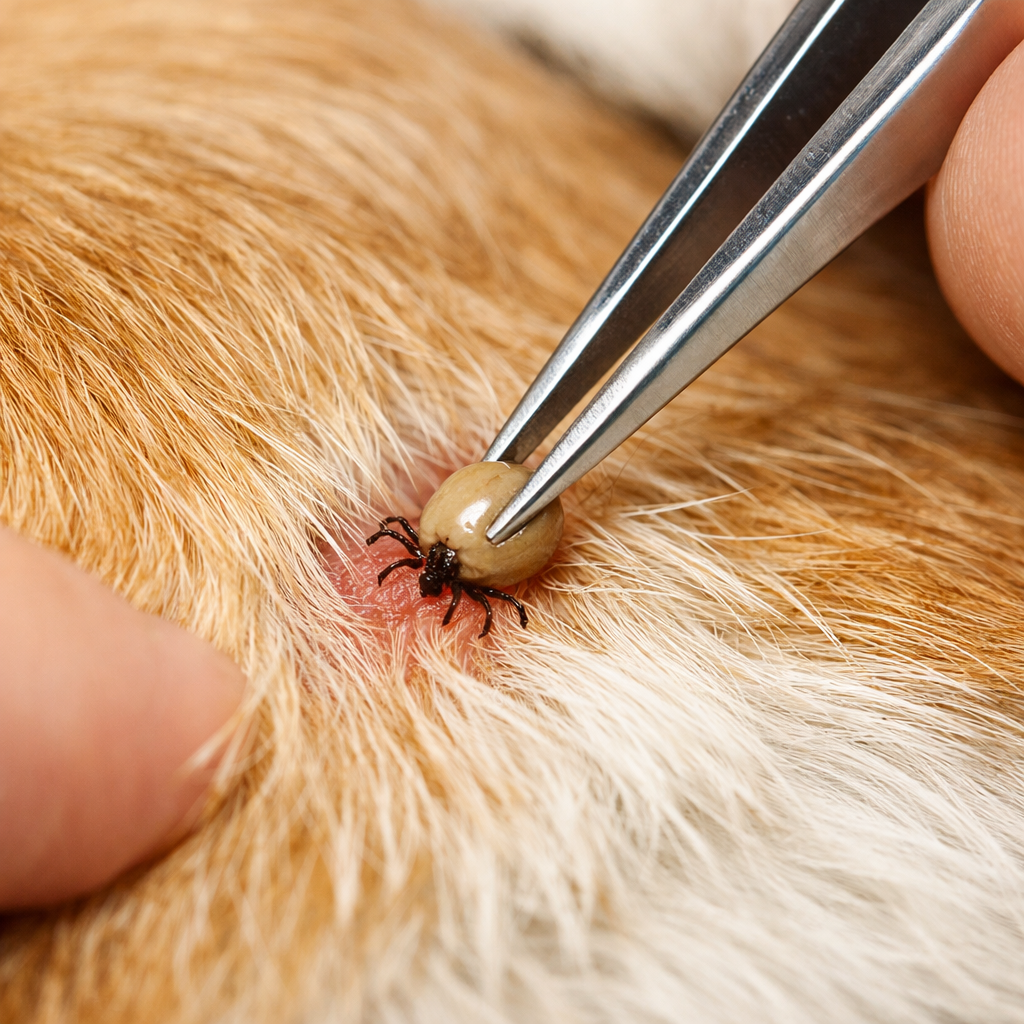
Found a tick on your dog? Removing it quickly and properly matters, because ticks carry infections. This guide shows how to remove a tick from a dog step by step, using the method recommended by the US Centers for Disease Control and Prevention (CDC), and explains why ticks are a real concern for dogs in India. For more on caring for dogs, visit our dog hub.
Why ticks matter for dogs in India
- A study of 525 dogs in Delhi, Mumbai, Sikkim and Ladakh found that 49.7% carried at least one tick-borne pathogen. [S2]
- The most common were Hepatozoon canis (30%) and Ehrlichia canis (20.6%); Babesia and Anaplasma were also found. [S2]
- About 39% of infected dogs had more than one infection. [S2]
- Ticks were found on 53% of the dogs, and Rhipicephalus was the most common tick. [S2]
What you need
- Clean, fine-tipped tweezers (regular tweezers will do if that’s all you have). [S1]
- Soap and water, rubbing alcohol or hand sanitiser. [S1]
- A small container with alcohol, or tape, to dispose of the tick. [S1]
- A helper to hold your dog still, and a treat.
How to remove a tick from a dog, step by step
- Part the fur so you can see where the tick is attached.
- Grasp the tick as close to the skin as possible with the tweezers, without squeezing its body. [S1]
- Pull straight out with steady, even pressure. Don’t twist or jerk, as that can break off the mouthparts. [S1]
- If mouthparts stay in the skin, try to remove them with the tweezers. If they won’t come out easily, leave them; the skin will push them out as it heals. [S1]
- Dispose of the tick: seal it in a container, wrap it tightly in tape, put it in alcohol, or flush it. Don’t crush it with your fingers. [S1]
- Clean the bite and your hands with soap and water, rubbing alcohol or hand sanitiser. [S1]
- Check for more ticks, especially around the ears, between the toes, under the collar and around the tail.
What not to do
- Don’t use petroleum jelly, nail polish, heat or other substances to make the tick let go. The CDC warns these can agitate the tick and force infected fluid into the skin. [S1]
- Don’t squeeze the tick’s body with your fingers or the tweezers. [S1]
- Don’t twist or jerk. [S1]
After removal: what to watch for
Tick-borne infections in dogs can cause fever, tiredness, loss of appetite, pale gums or unusual bleeding. If you notice any of these in the weeks after a tick bite, take your dog to the vet and tell them about the tick. Because co-infections are common, your vet may test for more than one disease. [S2]
Preventing ticks
- Ask your vet about a tick preventive suited to your dog’s age and weight, and use it on schedule.
- Check your dog for ticks after every walk, especially in grass or near other dogs.
- Wash your dog’s bedding regularly.
The Pawsitive Hoomans Take
With around half the dogs tested in that Indian study carrying a tick-borne infection, ticks aren’t a minor nuisance. Keep fine-tipped tweezers in your dog kit, check after every walk, and don’t let a vet visit slide if your dog goes off its food after a tick bite.
🐾 Log tick treatments and vet visits in a free Pet Passport, and set reminders with our Vaccination Tracker.
Frequently asked questions
What is the safest way to remove a tick from a dog?
Grasp it close to the skin with fine-tipped tweezers and pull straight out with steady pressure, without twisting or squeezing. [S1]
Should I put oil or Vaseline on a tick?
No. Petroleum jelly, nail polish and heat can force infected fluid into the skin. [S1]
What if the tick’s head stays in?
Try to remove it with tweezers; if it won’t come out easily, leave it and let the skin heal. [S1]
Are tick diseases common in Indian dogs?
Yes. A study of 525 dogs found 49.7% carried at least one tick-borne pathogen. [S2]
Sources and last checked
- [S1] US Centers for Disease Control and Prevention, What to do after a tick bite – cdc.gov – Last checked: 23-10-2026
- [S2] Abd Rani PAM, Irwin PJ, Gatne M, Coleman GT, Traub RJ et al., A survey of canine tick-borne diseases in India, Parasites & Vectors 4:141 (2011) – pmc.ncbi.nlm.nih.gov – Last checked: 23-10-2026
Disclaimer: PawsitiveHoomans is an independent information resource. This is general information, not veterinary advice; consult your vet about your dog.