
Understanding a Cat Choking Emergency
As dedicated pet parents, there is perhaps no moment more terrifying than realizing your feline companion is struggling to breathe. A cat choking emergency can escalate quickly, making it vital to remain calm, observant, and prepared to act. Whether your cat has accidentally swallowed a small toy, a piece of food, or a household object, your immediate response can be the difference between a minor scare and a life-threatening situation. For more comprehensive advice on overall feline well-being, visit our Cat Hub, where we cover everything from daily nutrition to common household hazards.
It is important to distinguish between choking and other respiratory issues, such as asthma or hairballs. A cat that is choking will often paw at its mouth, gasp for air, gag, or become suddenly silent as it struggles to dislodge an obstruction. Unlike a hairball, which involves a rhythmic heaving motion and the eventual expulsion of matter, choking is an acute distress signal that requires immediate intervention.
The Pawsitive Hoomans Take
At Pawsitive Hoomans, we believe that empowerment comes through knowledge. When faced with a choking feline, the first rule is to assess the environment and the cat’s level of consciousness. If your cat is still breathing and able to cough, let them try to clear the object on their own; sometimes, excessive interference can push a foreign body deeper into the throat. However, if the cat is struggling to breathe, showing signs of blue gums, or has become unconscious, you must intervene immediately. Always remember that fear can make even the gentlest cat lash out, so approach with caution to avoid injury to yourself while trying to save your pet.
🏥 Is your pet showing these symptoms? Log them instantly in our free Triage Engine inside Pet Passport to get immediate guidance.
Step-by-Step Response Protocol
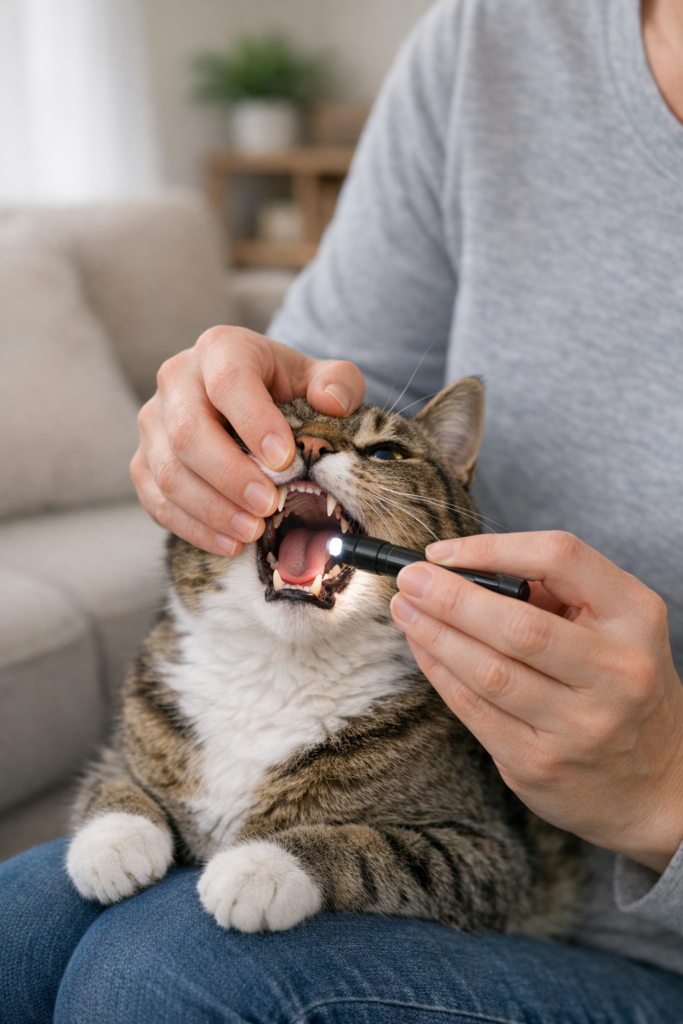
If you suspect your cat is choking, follow these steps with extreme care. First, open the cat’s mouth by gently pressing down on the lower jaw. Use a flashlight to inspect the throat. If you see the object and can easily reach it, use your fingers or blunt tweezers to remove it. Do not attempt a blind sweep of the throat, as this may push the object further down.
If the object is stuck, perform a modified Heimlich maneuver. For a cat, this involves placing the cat on its side and applying firm, quick pressure to the abdomen just below the rib cage. The goal is to create a burst of air from the lungs to push the obstruction out. After attempting this, check the mouth again. Even if you succeed, a trip to the vet is mandatory to ensure there is no internal trauma or esophageal damage.
Veterinary experts recommend keeping your pet’s records updated and accessible at all times. Using a Pet Passport to keep track of your cat’s medical history and vaccination status ensures that your vet can provide the fastest, most effective care in a crisis.
Preventing Future Choking Incidents
The best way to handle an emergency is to prevent it from happening in the first place. Many choking incidents in Indian households are caused by small human food scraps, sewing supplies, or small rubber bands left within a cat’s reach. Regularly audit your home for small items that could be swallowed. Ensure that dry food kibble is an appropriate size for your cat’s breed and eating style, and supervise playtime with small toys that might come apart.
Not sure what your pet needs? Use our free tools — Emergency Triage Guide or Custom Diet Calculator.
Frequently Asked Questions
How do I know if my cat is actually choking and not just coughing?
A cat is choking if it shows sudden, frantic pawing at the mouth, inability to make sound, and signs of panic or gasping for air. Coughing, in contrast, is usually related to hairballs, respiratory infections, or asthma, where the cat will often assume a hunched posture and emit a rhythmic ‘hacking’ sound. If your cat is in a state of silent, wide-eyed panic, treat it as a choking emergency immediately.
Can I try to remove the object with my fingers?
Yes, you can gently remove an object only if it is clearly visible and easily accessible with your fingers or blunt-tipped tweezers. Never attempt to poke blindly into the back of your cat’s throat, as the anatomy of a cat’s throat is delicate and you risk pushing a loose object further into the airway, which could cause a complete blockage.
Should I visit a vet even if the cat seems fine after choking?
Yes, you must visit a veterinarian immediately after any suspected choking incident even if the cat appears to be breathing normally again. Foreign objects can cause internal scratches, inflammation, or tears in the delicate tissues of the throat and esophagus, which can lead to severe secondary infections if left unmonitored.
Disclaimer: Pawsitive Hoomans is a team of pet advocates, not veterinarians. The information provided here is for educational purposes only and should not replace professional veterinary advice. Always consult with a qualified veterinarian regarding your pet’s health, especially during an emergency situation.