
Understanding Feline Mobility and Comfort
As dedicated pet parents, watching our feline companions struggle to jump onto their favorite windowsill or hesitate before climbing the stairs can be heartbreaking. Cat joint pain relief is a common concern as our cats age, but recognizing the signs early is the key to ensuring a high quality of life. Whether your cat is a senior or recovering from a minor injury, supporting their musculoskeletal health is essential for their overall wellbeing. For more general advice on maintaining your pet’s health, visit our comprehensive cat hub, where we cover everything from grooming to environmental enrichment.
Joint pain in cats is often subtle. Unlike dogs, who might vocalize or limp noticeably, cats are experts at hiding discomfort—an evolutionary trait designed to keep them safe in the wild. As pet parents, we must look for behavioral changes: are they sleeping more, grooming less in hard-to-reach areas, or showing irritability when touched near their hips or spine? Recognizing these shifts is the first step toward effective management.
The Pawsitive Hoomans Take
At Pawsitive Hoomans, we believe that the foundation of comfort lies in a holistic approach. We strictly advocate for force-free, gentle handling, especially when your cat is in pain. Never force a cat to move or jump if they appear hesitant. Instead, create an environment that minimizes physical stress. Our philosophy centers on preventive care and making small, compassionate adjustments to your home that allow your cat to remain independent and comfortable despite their mobility challenges.
🏥 Is your pet showing these symptoms? Log them instantly in our free Triage Engine inside Pet Passport to get immediate guidance.
Modifying the Environment for Comfort
One of the most effective ways to provide relief is to reduce the physical demands on their joints. Consider placing pet-friendly ramps or sturdy steps near high-traffic areas like sofas or beds. If you have multiple levels in your home, ensure that litter boxes, food, and water are easily accessible without requiring your cat to jump or climb stairs. In Indian households, where tiled or marble floors are common, these surfaces can be quite slippery for a cat with joint issues. Placing non-slip mats or rugs in areas where your cat frequently walks can significantly improve their confidence and stability.
Weight Management and Nutrition
Weight is perhaps the most significant factor in joint health. Excess weight puts immense pressure on delicate feline joints. Maintaining an ideal body condition score is critical. If you are concerned about your cat’s weight, always consult your veterinarian to establish a safe, gradual weight loss plan. Avoid “human” remedies or over-the-counter supplements unless specifically cleared by a professional. For guidance on tracking your cat’s health status, you can use our Pet Passport to keep detailed notes of your cat’s mobility trends and weight history.
Gentle Physical Support
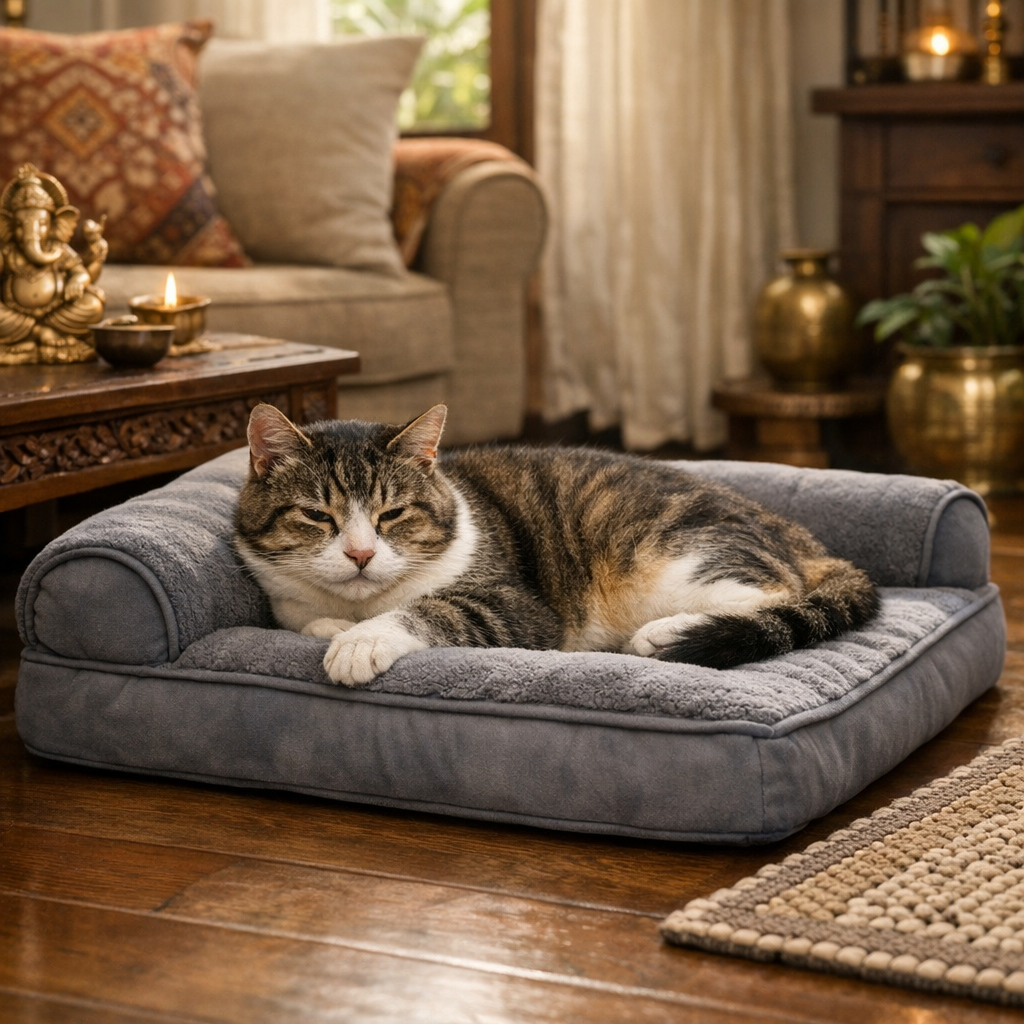
While you should never attempt to “fix” joint pain with massage unless trained, gentle petting and providing a warm, cushioned sleeping area can help. Cats with joint pain often seek warmth, which can help soothe stiff limbs. Ensure their bed is located in a draft-free, quiet corner of the house. Remember that any sudden changes in mobility—such as an inability to walk or severe limping—warrant an immediate visit to a qualified veterinarian.
Not sure what your pet needs? Use our free tools — Emergency Triage Guide or Custom Diet Calculator.
Frequently Asked Questions
Can I give my cat turmeric for joint pain?
No, turmeric can be toxic to cats and is not recommended as a DIY joint pain treatment. While popular in human medicine, cats metabolize substances differently than humans, and ingredients like curcumin can cause digestive upset or other medical complications in felines.
How do I know if my indoor cat is in pain?
Signs of pain in cats include decreased activity, difficulty jumping, a change in grooming habits, irritability when touched, and sleeping in abnormal positions. If you notice these signs, monitor them closely and document the frequency to discuss with your vet during your next appointment.
Are there safe home exercises for my senior cat?
Gentle play that encourages stretching rather than jumping is best, such as using a feather wand at ground level to encourage low-impact movement. Always follow your cat’s lead—if they stop moving or seem reluctant to engage, stop the session immediately and let them rest.
When should I see a veterinarian for joint issues?
Schedule a consultation immediately if you notice sudden lameness, swelling, vocalizing when moving, or if your cat stops using the litter box due to pain. Early intervention from a qualified veterinarian is essential for managing conditions like arthritis and preventing unnecessary suffering.
As you work toward keeping your cat comfortable, remember that tracking their habits is a great way to help your vet understand their needs better. Using the Pet Passport can help you keep a consistent record of your cat’s mobility, making your vet visits much more productive and informative.
Disclaimer: We are passionate pet care advocates, not veterinarians. The information provided here is for educational purposes only and should not replace professional veterinary advice, diagnosis, or treatment. Always consult with a qualified veterinarian regarding your pet’s health, diet, or any changes in behavior.