
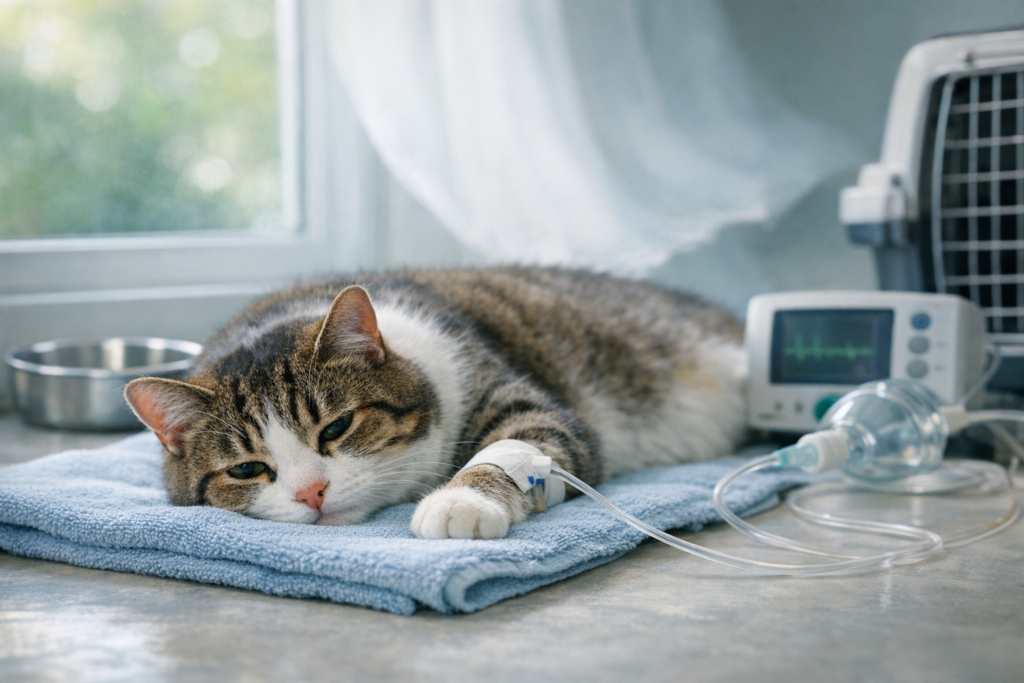
What is Hyperthermia in Cats?
As dedicated pet parents, our cats’ health and well-being remain our top priority. One of the most frightening emergencies a cat owner can face is hyperthermia. Understanding hyperthermia in cats is crucial because, unlike fever, which is a systemic response to infection, hyperthermia occurs when a cat’s body temperature rises dangerously above its normal range due to an inability to dissipate heat effectively. While a normal feline body temperature typically hovers around 38 to 39 degrees Celsius (100.4 to 102.2 degrees Fahrenheit), temperatures exceeding 40 degrees Celsius (104 degrees Fahrenheit) indicate a serious, life-threatening emergency that requires immediate intervention.
The Pawsitive Hoomans Take
At Pawsitive Hoomans, we believe that the foundation of great pet care is proactive observation and gentle, force-free management. When dealing with a medical crisis like hyperthermia, our approach focuses on reducing stress—which can often exacerbate an animal’s condition—and providing immediate, non-invasive support. We strongly advocate for using positive reinforcement in your day-to-day life to keep your cat calm and secure. A cat that is comfortable and unstressed is less prone to the physiological surges that can trigger temperature spikes. If your cat does face a health scare, your calm presence is the best tool you have to keep them steady while you seek professional veterinary guidance.
Common Causes of Overheating in Felines
Hyperthermia is primarily a problem of heat dissipation. Unlike dogs, cats are not natural panters; when a cat begins to pant, it is a significant red flag that they are struggling to regulate their body temperature. Common triggers for this dangerous rise in body temperature include environmental stress, such as being left in an unventilated, overly warm area or an enclosed vehicle. Furthermore, medical events such as sudden seizures can cause a cat’s body temperature to skyrocket rapidly. Exposure to specific toxins, such as permethrin, can also induce tremors or seizures, leading to hyperthermia. Additionally, underlying systemic health issues like feline panleukopenia virus or hormonal imbalances such as hyperthyroidism can compromise a cat’s ability to maintain a healthy thermal balance.
Recognizing the Symptoms
Early detection is the difference between a minor scare and a fatal event. You should be acutely aware of the warning signs:
- Panting: As mentioned, cats do not pant under normal circumstances. If your cat is panting, they are likely in distress.
- Excessive Salivation: Drooling is often a symptom of intense internal heat.
- Gastrointestinal Distress: Vomiting and diarrhea are common indicators that the cat’s systems are failing due to heat stress.
- Restlessness: A cat suffering from hyperthermia will often struggle to find a comfortable position, pacing or moving repeatedly.
- Neurological Signs: Weakness, stumbling, seizures, and sudden collapse are signs that the hyperthermia has reached a critical stage.
Emergency First-Aid Steps
If you suspect your cat is suffering from hyperthermia, you must act quickly, but correctly. First, use a digital thermometer to confirm their rectal temperature. If it exceeds 104-105 degrees Fahrenheit, you must initiate cooling immediately. Crucially, never use ice packs directly on your cat. Sudden exposure to ice can cause vasoconstriction, which traps heat inside the body and may cause local tissue necrosis. Instead, wrap ice packs in a towel and gently place them against the cat’s body. This allows the heat to dissipate gradually and safely. Do not rely on high-powered air conditioning which might shock the system; instead, place the cat in a well-ventilated area with a fan circulating air. Once the initial cooling process has begun and the cat’s temperature begins to lower slightly, transport them to a veterinarian immediately. The professional will provide essential intravenous fluids, oxygen therapy to support breathing, and medication to control any seizures.
Holistic and Supportive Care
While veterinary care is non-negotiable for hyperthermia, supportive care can help stabilize your cat during the transition. If your cat is showing signs of distress from heat, certain homeopathic remedies like Belladonna may be suggested as a supportive measure. Administering three to four drops every two hours can help manage acute heat stress symptoms. However, remember that these are auxiliary measures. The priority is always to get your cat to a medical professional. By staying calm, monitoring your cat’s environmental conditions, and having an emergency plan in place, you can protect your feline companion from this dangerous condition. Always monitor your pet’s behavior closely, and if you have any doubts about their health, don’t hesitate to reach out for professional consultation to ensure your furry friend stays happy, cool, and comfortable.