
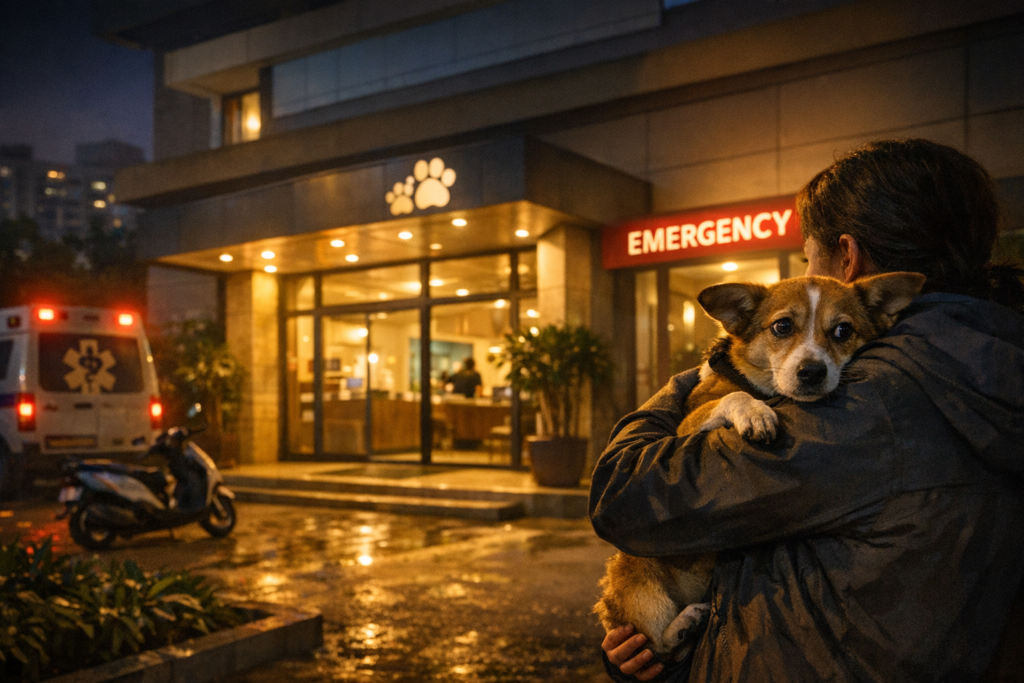
Navigating Emergency Care in Bengaluru
Finding a reliable 24 hour animal hospital Bengaluru how to prepare guide can mean the difference between panic and smooth, swift action during a midnight medical crisis. Whether you share your home with a rescued Indian street dog, a rescued indie cat, or any other companion animal, emergencies rarely happen during convenient daytime hours. For comprehensive guidance on keeping your multi-species household healthy, explore our dog care hub for essential wellness tips. Bengaluru is home to a wonderfully passionate rescue community, but navigating the city’s chaotic night traffic while trying to locate a truly operational emergency clinic requires calm strategy and upfront preparation.
As dedicated pet parents, we never want to imagine our beloved animals falling ill or suffering an injury in the middle of the night. However, waiting until a crisis strikes to figure out where to go or what to pack only adds precious minutes of delay to critical medical care. Proper preparation ensures you can move efficiently, communicate clearly with veterinary professionals, and keep your animal companion as comfortable as possible during transit.
How to Identify and Verify Emergency Facilities
The first step in your emergency plan is knowing which clinics actually offer true round-the-clock critical care versus those that simply keep their lights on with a security guard at the gate. Unfortunately, many listings online claim 24/7 availability when they are actually closed or lack veterinary staff overnight. Never rely solely on unverified listings found in random social media forwards or outdated directory sites.
When identifying a genuine emergency hospital, look for established veterinary institutions with dedicated emergency and critical care units. You should physically call the facility before leaving your house—even at 2:00 AM—to confirm that a qualified veterinarian is actively on duty and equipped to handle your specific type of emergency. Ask if they have oxygen support, emergency surgical capabilities, and critical care monitoring equipment available right at that moment.
What to Ask in Advance
Do not wait for a midnight crisis to ask crucial questions about how a clinic operates. Take time during a routine weekend to call or visit prospective hospitals and clarify their emergency protocols. Understanding their procedures in advance eliminates stressful guesswork when every second counts.
- Nighttime Triage Protocols: Ask how they handle sudden walk-in emergencies and whether you need to call ahead while on the road.
- Species Expertise: Confirm whether they treat multi-species rescues or if they primarily handle dogs and cats, ensuring they can accommodate your specific companion.
- Billing and Payment Policies: Inquire about accepted payment methods during night shifts, as online server downtime or card machine issues can occasionally happen after hours.
- Diagnostic Capabilities: Check if in-house bloodwork, digital X-rays, and ultrasound are fully accessible overnight or if those services require waiting for daytime staff.
What to Keep Ready Before an Emergency Strikes
When an animal is in distress, running around the house looking for documents or carriers wastes valuable time. Putting together an emergency kit ahead of time keeps you grounded and ready for immediate departure.
Keep a dedicated emergency file near your front door containing your pet’s complete medical history, previous vaccination records, and a list of any ongoing medications or known allergies. Having this ready allows the medical team to make rapid, informed decisions without guessing past health issues. For tracking vaccination schedules and preventing missed doses, utilize the pet vaccination tracker to keep all immunization records instantly accessible on your phone.
Additionally, keep a sturdy leash, a secure muzzle (even the gentlest animals can snap when in severe pain), a comfortable pet carrier for cats or smaller animals, and old towels or clean blankets ready by the exit. If your animal companion has mobility issues, having a supportive sling or a small board near the door can make safe lifting much easier.
The Pawsitive Hoomans Take
At Pawsitive Hoomans, we believe that proactive preparation is one of the most loving gifts we can give our companion animals. Bengaluru’s bustling rescue community has built an incredible network of mutual support, but individual pet parents must take personal responsibility for mapping out their emergency routes and verifying hospital capabilities before trouble arises. By cutting through unverified directory listings and keeping your emergency documents and transport gear organized today, you build a safety net that protects your furry family members when they need you most.
🏥 Is your pet showing these symptoms? Log them instantly in our free Triage Engine inside Pet Passport to get immediate guidance.
Not sure what your pet needs? Use our free tools — Emergency Triage Guide or Custom Diet Calculator.
Frequently Asked Questions
Are 24 hour animal hospitals in Bengaluru open on public holidays and festival nights?
Yes, genuine 24 hour animal hospitals in Bengaluru remain operational 365 days a year, including major festival nights and public holidays, though staffing may sometimes be leaner. Always call ahead before travelling to ensure an emergency veterinarian is actively present on site.
What should I do if my usual vet is closed and I cannot find a verified 24/7 clinic nearby?
If your regular vet is closed and you cannot reach a verified 24-hour facility, contact established local rescue groups or municipal animal shelters in Bengaluru who maintain updated night-emergency contacts. To record your pet’s complete health history and emergency contacts in one secure spot, explore the pet passport dashboard.
How can I safely transport an injured street rescue animal to a hospital at night?
To safely transport an injured street rescue animal at night, gently place a thick blanket or makeshift stretcher underneath them to avoid worsening any spinal or bone fractures. Keep your vehicle quiet, drive smoothly without sudden braking, and call the hospital while en route so they can prep the trauma bay.
Disclaimer: Pawsitive Hoomans is not a veterinary practice or medical provider. The content provided here is for informational and educational purposes only. Always consult a qualified veterinarian for professional medical diagnosis, treatment recommendations, and emergency care decisions for your pets.