
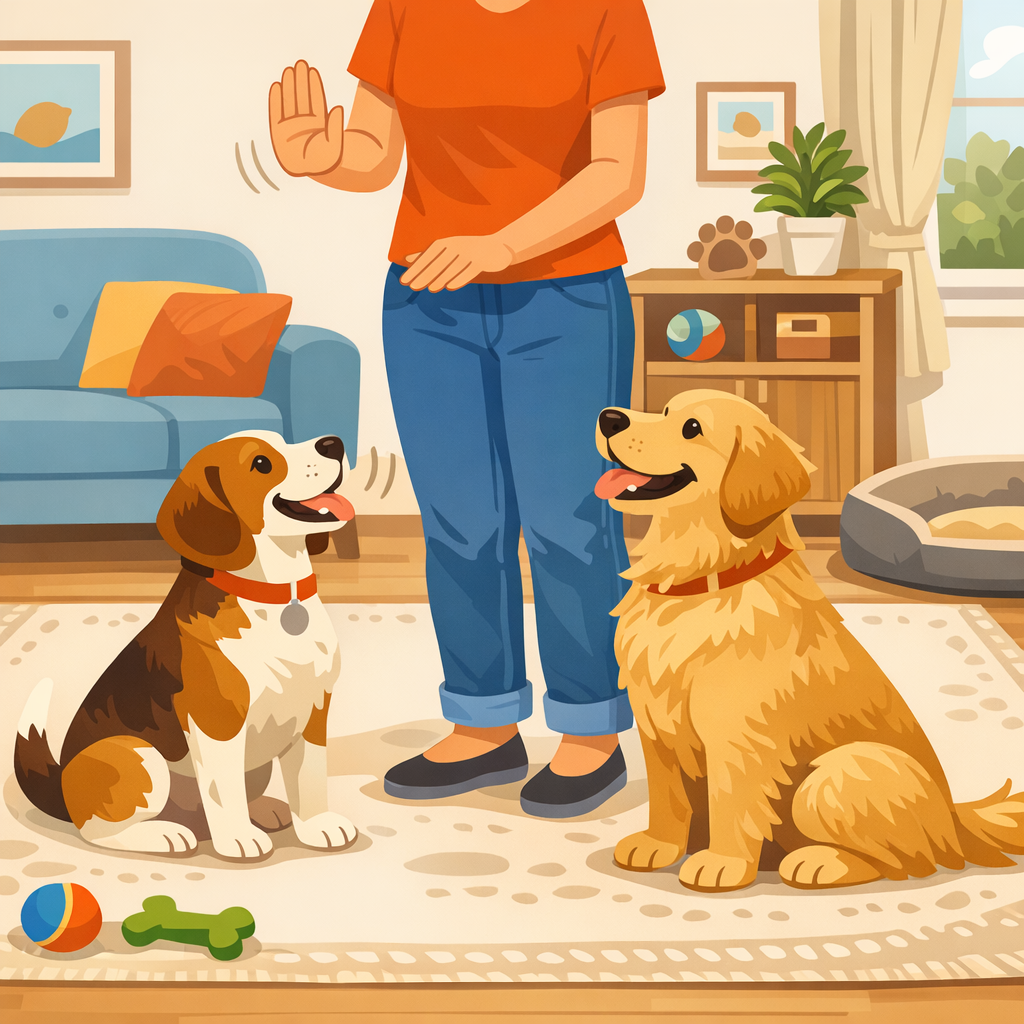
Mastering Multi-Dog Harmony: How to Get Multiple Dogs to Listen at the Same Time
Living in a multi-dog household is a rewarding experience filled with extra wagging tails and double the affection. However, it also presents a unique set of challenges when it comes to training and communication. If you find yourself shouting into a sea of chaos every time you ask for a simple “sit,” you aren’t alone. Learning how to get multiple dogs to listen at the same time is not about being the loudest person in the room; it is about establishing clear, consistent, and individualized communication with each member of your furry pack.
At Pawsitive Hoomans, we believe that effective training stems from trust, predictability, and positive reinforcement. When you have more than one dog, the environment becomes naturally more distracting. Each dog has their own personality, energy level, and motivation, and your task as a pet parent is to harmonize these individual traits into a cohesive unit that responds to your guidance.
The Power of Individual Training Sessions
One of the biggest mistakes pet parents make is assuming that training must happen with the entire pack present. While it is essential to reach a point where your dogs listen as a group, this is the final stage of training, not the starting point. Before your dogs can listen to you in a group setting, they must have a rock-solid foundation of obedience as individuals.
Research shows that dogs learn best when the environment is low-distraction. When your dogs are together, they often feed off each other’s energy—or anxiety. By taking each dog out for dedicated, short training sessions, you build a unique bond with that specific animal. This one-on-one time allows you to reinforce commands without the competition or interference of their “siblings.” Once a command is mastered by each dog individually, you can slowly begin to introduce the presence of other dogs during those sessions.
Defining Your Communication Style
Dogs are masters of body language. They watch us far more than they listen to the specific words we use. If you are struggling to get your pack’s attention, consider how your physical presence might be affecting the outcome. Are you tense? Are you moving too quickly? Or perhaps your signals are inconsistent between the dogs?
As pet parents, we must be the calm center of our pack. Use clear, distinct hand signals paired with your verbal commands. When working with multiple dogs, try to pair a specific verbal command with a clear gesture. More importantly, ensure that your timing with rewards is impeccable. If you ask for a “down” and both dogs lie down, but you only have a treat for one, the other dog may eventually learn that listening is optional. Always keep a high-value treat pouch handy to reward every dog for compliance, reinforcing the idea that listening to you is the most lucrative activity in the house.
The Role of Pacing and Sequencing
When you are ready to transition to training your dogs as a group, start with “sequential” listening. This means asking for a behavior from one dog while the others are in a “wait” or “stay” position. This teaches impulse control. For instance, ask Dog A to “sit,” then reward them. Meanwhile, reinforce that Dog B must remain in their “stay” position. This forces the pack to learn that your focus is intentional and that they must wait their turn for both your command and the subsequent reward.
Veterinary experts often point out that the “social loafing” phenomenon—where one dog lets the other do the work—can happen if we don’t hold them individually accountable. By rotating which dog you reward first, you prevent resentment and ensure that every dog remains highly engaged. Remember, force-free training relies on the motivation of the animal; if they feel the process is unfair or confusing, their motivation will naturally decline.
The Pawsitive Hoomans Take
At Pawsitive Hoomans, our philosophy is rooted in the idea that every dog is an individual, even when they are part of a pack. We believe that trying to force a “pack mentality” on domestic dogs is often counterproductive. Instead, we advocate for “benevolent leadership,” where you act as the consistent, calm, and reliable guide for each dog. When you nurture individual relationships, you create a foundation of respect that carries over into group situations.
Patience is your greatest tool. If your dogs aren’t listening, it is rarely because they are being “stubborn” or “disobedient.” More often, it is because the distraction level is too high, or the reward isn’t valuable enough to compete with their environment. Always look for ways to lower the difficulty level before increasing your expectations. If they can’t listen in the living room, don’t try to get them to listen at the local dog park.
Creating a Culture of Consistency
For your dogs to listen at the same time, the rules must be the same every day, regardless of who is in the room. If one family member allows the dogs to jump up but you don’t, the confusion will manifest as a lack of listening. Ensure that everyone in the household is on the same page regarding commands, hand signals, and the rules of the house. Consistency acts as a shorthand for dogs; the clearer the rules, the less time they have to spend wondering what you want, and the more energy they have to simply execute the command.
Also, prioritize mental stimulation. A dog that is bored is a dog that will seek its own entertainment, which rarely aligns with your training goals. Puzzle feeders, scent work, and brief, high-intensity training sessions can drain excess energy, leaving your dogs in a state of mind that is much more receptive to your instructions.
Not sure what your pet needs? Use our free tools — Emergency Triage Guide or Custom Diet Calculator.
Finally, always remember that you are your dog’s advocate. If you notice a sudden change in behavior where your dog stops listening, it may be a sign of underlying pain or medical discomfort rather than a training issue. Never hesitate to reach out to your veterinarian to rule out health issues before assuming that the problem is behavioral. Your role is to provide the structure, the rewards, and the environment that allows your dogs to succeed.
Disclaimer: This article is for informational purposes only and does not constitute veterinary or professional training advice. Every dog is unique, and behavior challenges can be complex. Please consult with your veterinarian or a certified professional force-free dog trainer before starting new training regimens or if you are concerned about your pet’s behavior or health.