
Understanding the Root of Bathing Anxiety
For many of us, the phrase “bath time” is met with enthusiastic tail wags, but for others, it triggers an immediate retreat under the bed. Learning how to bathe a dog who HATES baths is less about the mechanics of soap and water and more about deconstructing your pet’s fear response. At Pawsitive Hoomans, we believe that bathing should be a bonding experience, not a wrestling match. When a dog panics, their cortisol levels spike, making it nearly impossible for them to process positive experiences. By identifying the root cause of their anxiety—whether it is the slippery surface of the tub, the temperature of the water, or the loud noise of a showerhead—we can systematically desensitize them to the process.
The Science of Fear-Free Grooming
Research shows that dogs often perceive a bath as a loss of agency. Being lifted into a slippery, confined space feels inherently threatening to a canine who relies on their paws for stability. To change their perception, we must shift from a ‘get the job done’ mentality to a ‘build the confidence’ approach. Veterinary experts recommend starting slow, using high-value rewards, and ensuring that the dog never feels trapped or forced into a state of panic.
Preparation: Setting the Stage for Success
Before you even turn on the faucet, your setup needs to address your dog’s physical stability. If a dog feels like they are sliding around, their muscles will tense up, which in turn spikes their heart rate. Use a non-slip rubber mat or a folded towel on the floor of the tub. This simple adjustment often reduces a dog’s stress by over 50%. Additionally, the temperature of the water should be lukewarm—never hot or freezing—as dogs are highly sensitive to sudden thermal changes. If you are using a sprayer, keep the pressure low and aim the water away from their face initially, as water pressure on the muzzle is a common trigger for head-shyness.
The Pawsitive Hoomans Take
At Pawsitive Hoomans, our philosophy is rooted in the belief that no pet should ever be forced into a situation that triggers extreme fear or defensive aggression. When it comes to grooming, force-free methods are the only way to build long-term trust. We advocate for a ‘consent-based’ approach to bathing. If your dog indicates they are overwhelmed by trying to leave, scratching at the door, or shivering excessively, stop the process. You haven’t failed; you have simply discovered that your current ‘step’ in the training plan is too large. Break the bathing process into microscopic steps: perhaps day one is just standing in the tub with the water off, while day two is just getting their paws wet. By moving at their pace, you ensure that the bath becomes a ‘nothing to fear’ event rather than a recurring trauma.
Desensitization Techniques
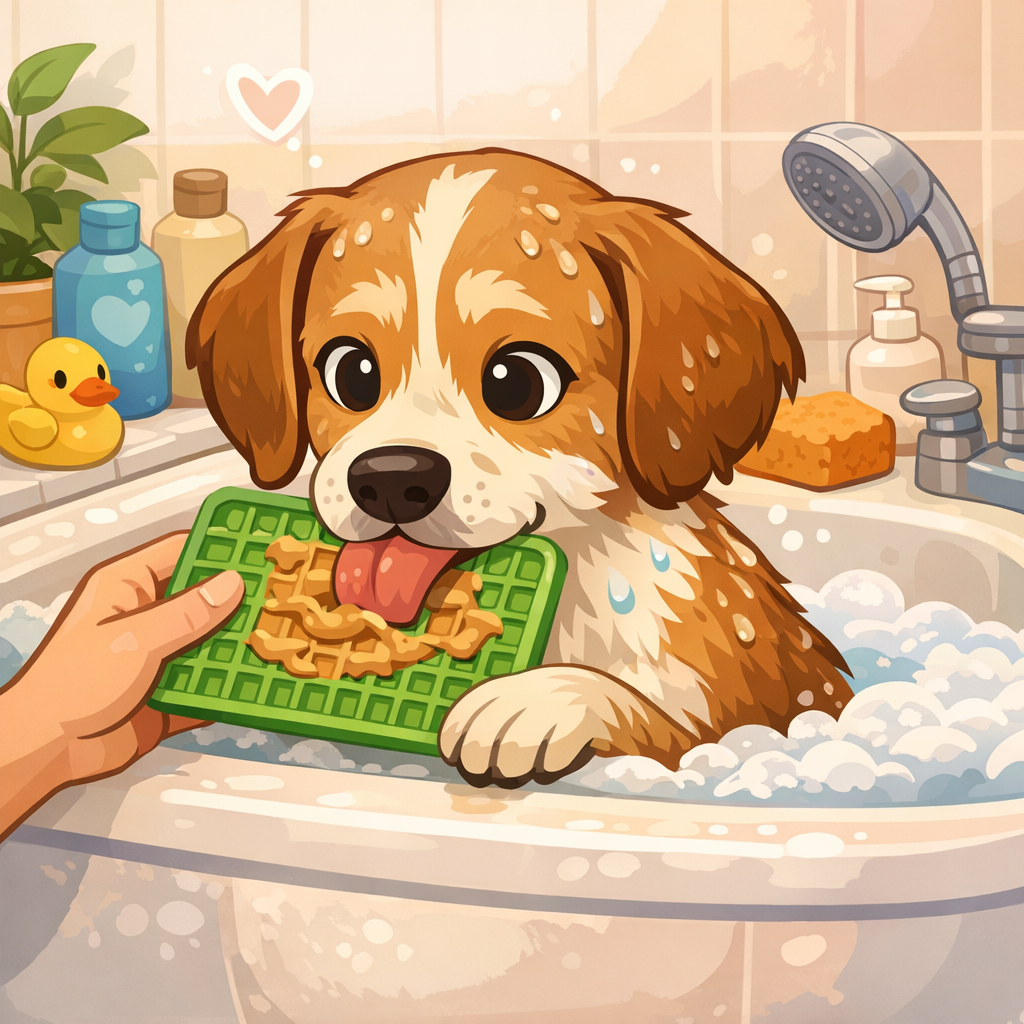
To desensitize your dog, you can use a technique often discussed in animal behavior circles called ‘counter-conditioning.’ This involves pairing the presence of the bathtub with something the dog absolutely loves, such as peanut butter smeared on a lick mat attached to the wall of the tub. As the dog focuses on the treat, they are physically unable to remain in a state of high-intensity panic. Over time, the tub becomes a predictor of ‘tasty snacks’ rather than ‘scary water.’
Tips for the Grooming Process
When you finally start the actual wash, efficiency is your friend. Have all your supplies—dog-specific shampoo, a non-slip cup, towels, and rewards—within arm’s reach before the dog enters the room. Never leave the room once your dog is in the tub. Your calm presence acts as an anchor for them. Speak in a low, soothing, and rhythmic voice. Research into canine auditory perception suggests that steady, monotone sounds are more comforting to anxious dogs than high-pitched, excited ‘baby talk,’ which can sometimes inadvertently increase their arousal levels.
Addressing Sensory Overload
Some dogs are particularly sensitive to the acoustics of a bathroom. The echo of the room and the metallic clanking of the tub can be deafening to a canine’s heightened hearing. You might consider using a quiet space, such as a walk-in shower with a glass door or even an outdoor wash station during warmer weather, if the indoor bathroom seems to be the primary stressor. Always ensure the dog’s ears are protected from water ingress, as trapped water can cause discomfort and potential ear infections, which will only make future baths even more difficult.
What to Avoid: Common Mistakes
Avoid using heavy restraint devices or muzzles unless explicitly guided by a professional behaviorist for safety reasons. Forcing a dog into a position they cannot escape from can lead to ‘learned helplessness,’ where the dog stops struggling but remains in a state of intense internal distress. Never scold or punish a dog for shaking or trying to jump out; they are communicating their fear, and punishing that communication will only suppress the outward signs while increasing their internal anxiety. If your dog is a rescue, they may have a history that makes baths particularly terrifying. In these cases, patience must be doubled, and professional guidance from a certified force-free trainer is highly encouraged to help them navigate their past associations.
When Professional Help is Needed
If your dog displays signs of severe reactivity, such as snapping, lunging, or biting during bathing attempts, it is time to stop and consult with a professional. There is no shame in utilizing a mobile grooming service or a professional groomer who specializes in ‘fear-free’ handling. Sometimes, a neutral party can handle the grooming process more effectively because they do not carry the emotional weight of the parent-pet relationship. Additionally, some dogs with severe anxiety may benefit from a check-up with your primary care provider to rule out any underlying medical conditions or pain that might make physical manipulation during a bath especially uncomfortable.
Remember, the goal is not to have a perfectly clean dog at the cost of your bond. The goal is to nurture a dog who trusts you to keep them safe, even when the experience is outside their comfort zone. Through consistent, gentle, and reward-based training, most dogs can learn to tolerate—and sometimes even enjoy—the bathing process.
Not sure what your pet needs? Use our free tools — Emergency Triage Guide or Custom Diet Calculator.
Disclaimer: This content is for educational and informational purposes only and does not constitute professional veterinary advice, diagnosis, or treatment. Always seek the advice of your veterinarian or other qualified health provider with any questions you may have regarding a medical condition or the health and behavior of your pet. Never disregard professional veterinary advice or delay in seeking it because of something you have read here.