
Understanding Dog Choking Hazards
As pet parents, there is nothing more frightening than seeing our beloved companions struggle to breathe. Whether it is a small piece of a toy, a stray bone from a meal, or even a piece of dry kibble that went down the wrong way, dog choking is a genuine emergency that requires immediate, calm action. At Pawsitive Hoomans, we believe that being prepared is the best way to keep your furry friend safe. If you are looking for more foundational tips on keeping your pet healthy, be sure to visit our comprehensive dog care guide to ensure you have all your bases covered before an emergency arises.
It is important to differentiate between choking and other respiratory issues. A choking dog will often be pawing at their mouth, gagging, or gasping for air. Their gums may turn pale or bluish, which is a sign that they are not getting enough oxygen. In contrast, a “reverse sneeze”—a common occurrence in many Indian dog breeds—usually sounds like a prolonged snorting or honking noise, but the dog remains conscious and is able to breathe in between the bouts. If you aren’t sure what your pet needs, keep a close watch on their behavior and breathing patterns.
The Pawsitive Hoomans Take
At Pawsitive Hoomans, our philosophy is centered on gentle, force-free care. While emergency interventions can be intense, they must always be done with the primary goal of clearing the obstruction without causing secondary injury. We strongly advise against using force or panic-induced movements, which can cause the dog to bite or swallow the object further. Instead, we advocate for a systematic approach: assess, clear if safe, and perform the Heimlich maneuver only when absolutely necessary. Always remember that your goal is to assist the dog’s natural reflex to expel the object.
Not sure what your pet needs? Use our free tools — Emergency Triage Guide or Custom Diet Calculator.
🏥 Is your pet showing these symptoms? Log them instantly in our free Triage Engine inside Pet Passport to get immediate guidance.
Step-by-Step: Managing a Choking Emergency
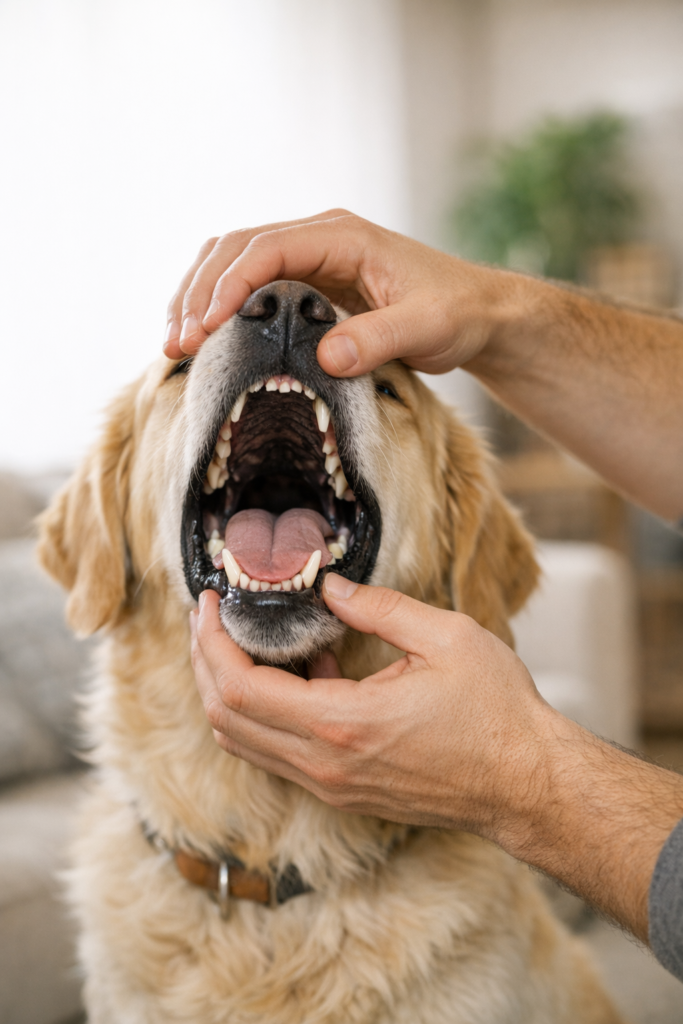
If you suspect your dog is choking, follow these steps immediately. First, stay calm—your dog can sense your anxiety, and keeping a steady hand is crucial. Check the mouth by gently lifting the jowls. If you can clearly see the object and it is within reach, use your fingers or blunt tweezers to sweep it out. Be careful not to push the object deeper into the throat. If you cannot see it or reach it easily, do not force your fingers down the throat.
If the obstruction persists, you may need to use gravity or controlled pressure. For smaller dogs, hold them by the hips with their head tilted downward and gently shake them, which may help gravity dislodge the object. For larger dogs, place them on their side and perform firm thrusts just below the ribcage. Research shows that timing is critical in these situations. If these methods fail, get to a veterinary clinic immediately. Do not wait to see if the object dislodges on its own if the dog is losing consciousness or turning blue.
Prevention is always better than cure. Be mindful of “human food” scraps that are common in Indian households, such as chicken bones or pieces of coconut shell, which are notorious choking hazards. Ensure all toys are size-appropriate for your dog’s breed and supervised play is the standard. Use the Pet Passport to keep all your emergency contacts and vaccination records in one digital space, so you never waste time searching for help when it matters most.
Frequently Asked Questions
How do I know if my dog is actually choking and not just coughing?
A choking dog will display signs of extreme distress such as pawing at the mouth, frantic gasping, or a sudden change in tongue/gum color to pale blue, while a coughing dog will be able to move air through the windpipe. Choking is a silent or quiet event where the airway is completely blocked, whereas a cough or a reverse sneeze is usually accompanied by distinct, audible sounds and the dog will remain alert and breathing. If your dog is struggling to inhale, prioritize an emergency veterinary visit.
Should I put my fingers down my dog’s throat to remove a bone?
No, you should only attempt to manually remove an object if you can clearly see it and it is within easy reach without forcing your fingers into the throat. Trying to “fish” for an object you cannot see is dangerous as it can push the item further down the airway or cause you to be bitten due to your dog’s pain and panic. If you cannot see the obstruction, rely on chest thrusts or seek immediate professional help.
What is the safest way to perform the Heimlich maneuver on a small Indian dog?
To perform the Heimlich on a small dog, hold the animal with its back against your stomach, head facing downward, and use two fingers to apply firm, quick thrusts to the soft area just below the rib cage. The downward tilt utilizes gravity to help the dislodged object exit the mouth, and the soft thrusts apply the pressure needed to force trapped air out of the lungs to push the obstruction clear. Always keep the pressure controlled to avoid internal bruising.
Disclaimer: We are passionate pet advocates, not veterinarians. This content is for educational purposes only and should not replace professional medical advice. Always consult a licensed veterinarian for any medical concerns regarding your pet’s health or if you suspect an emergency.