
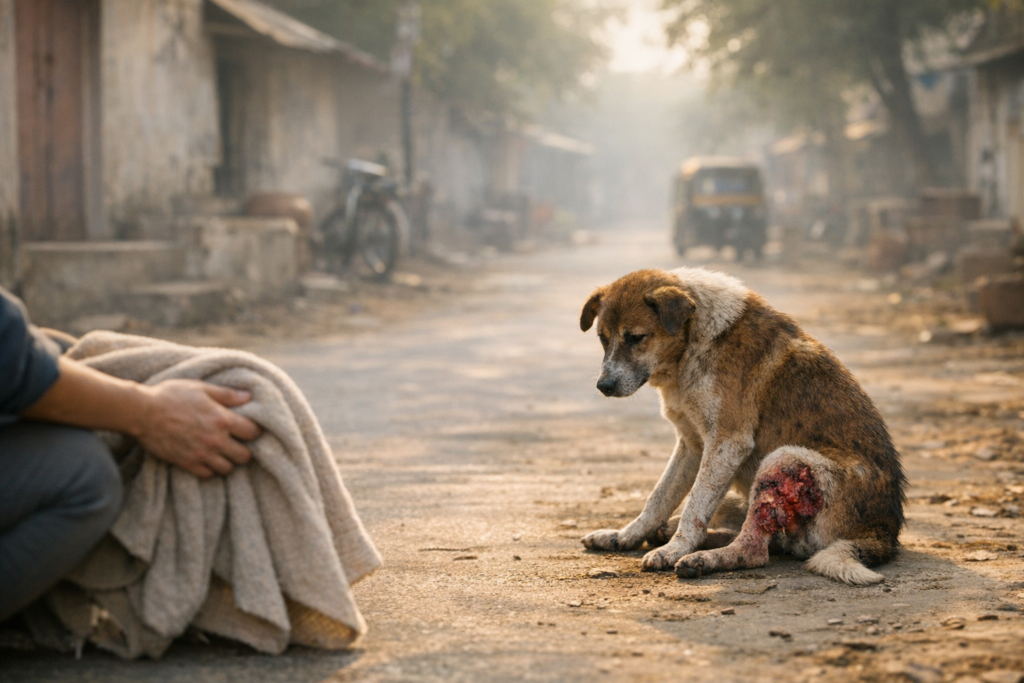
Understanding Your Role as a Community Caretaker
Helping an injured street animal in India is an act of profound kindness, but it requires a calm head, quick thinking, and a focus on safety—both for you and the animal. As pet parents and community members, our dog-loving community often finds itself in situations where a furry friend on the street is in distress. Whether it is a stray puppy with a minor scrape or a more serious situation involving a vehicle accident, knowing the right steps can truly save a life. At Pawsitive Hoomans, we believe that every animal deserves compassion, and with the right approach, you can bridge the gap between suffering and recovery.
When you encounter an animal in pain, the first thing to remember is that an injured animal is a scared animal. Even the gentlest stray may bite or scratch out of fear or sheer agony. Your primary goal is to assess the situation from a distance, ensure the environment is safe, and reach out to local resources. Never put yourself in a situation where you might get trapped or injured, as that ultimately prevents you from helping the animal effectively.
The Pawsitive Hoomans Take
At Pawsitive Hoomans, we champion a proactive, force-free, and respectful approach to animal welfare. Helping street animals isn’t just about the immediate rescue; it’s about the long-term commitment to their well-being. We advocate for local community support networks, where neighbors work together to provide clean water, food, and shelter for street animals. When an injury occurs, we recommend documenting the situation, seeking professional veterinary advice immediately, and ensuring the animal has a quiet, stress-free space to recover. Remember, medical decisions should always be made in consultation with a qualified veterinarian, as they have the expertise to assess internal trauma that might not be visible to the naked eye.
🏥 Is your pet showing these symptoms? Log them instantly in our free Triage Engine inside Pet Passport to get immediate guidance.
Step-by-Step Approach to Rescue
The first step is stabilization. If the animal is on a busy road, move yourself to safety first. Use a soft cloth or a blanket to cover the animal gently if they are shivering or in shock. Covering their head often helps them calm down, as it reduces sensory overload. Avoid force-feeding water or food if the animal is unconscious or having trouble breathing, as this can lead to aspiration. Instead, prioritize keeping them warm and quiet until you can contact a rescue organization or a vet.
It is vital to build a network. In India, many cities have dedicated animal rescue NGOs and 24/7 clinics. Keep a list of these numbers saved on your phone. When you call, provide the exact location, a brief description of the injury, and the animal’s current behavior. If the animal is small, you might be able to transport them yourself using a sturdy box or carrier, but always prioritize your safety.
Advocating for Post-Recovery Care
Once the immediate medical emergency is addressed, the journey continues. Many street animals struggle with post-recovery stress or nutritional deficits. Ensuring they have a clean space to recuperate is half the battle. If you are fostering an animal, remember that consistency is key. Provide calm, positive interactions and refrain from overwhelming the animal with too much physical handling until they feel secure. Veterinary experts recommend consistent monitoring during the healing process to catch any signs of infection or regression early.
For owners looking to manage the ongoing health of their pets and rescue animals, tracking vaccination records and physical changes is essential. You can manage these records easily using the Pet Passport feature to ensure no check-up or medication dose is missed during the healing process.
Frequently Asked Questions
What should I do immediately if I see an injured dog on a busy Indian road?
Prioritize your safety by moving yourself and the animal out of the path of traffic immediately using a blanket or a piece of cardboard to guide them. Once you have moved the animal to a safe, quiet spot on the side of the road, call a local animal rescue organization or a 24-hour veterinary clinic to report the exact location and nature of the injury so they can dispatch help.
Can I give human painkillers to a street dog that seems to be in pain?
No, never administer human painkillers like paracetamol or ibuprofen to a street animal, as these can be toxic and fatal to dogs. Always wait for a qualified veterinarian to assess the animal and prescribe safe, animal-specific pain relief medication based on the animal’s weight and medical condition.
How do I handle a stray dog that is growling in pain?
Maintain a safe distance and do not try to touch or restrain the animal, as a dog in pain will often bite out of fear and instinct. Instead, observe them from a distance, clear the area of onlookers who might be stressing the animal, and wait for professional rescuers who have the proper equipment like nets or muzzles to handle them safely.
Should I provide food and water to an injured animal immediately?
Do not offer food or water if the animal is in shock, unconscious, or showing signs of difficulty breathing, as they could choke or inhale the contents into their lungs. Keep the animal warm with a blanket and focused on quiet rest until a veterinarian can provide a professional examination and clearance for feeding.
Disclaimer: The information provided here is for educational purposes and is based on general animal welfare best practices. It is not a substitute for professional veterinary advice, diagnosis, or treatment. Always consult with a qualified veterinarian regarding your pet’s health or the care of an injured animal.
Not sure what your pet needs? Use our free tools — Emergency Triage Guide or Custom Diet Calculator.