
Understanding Dog Ear Infection: Natural Remedy Insights for Pet Parents
As pet parents, there is nothing more distressing than seeing our furry companions suffer from discomfort, especially when it involves their sensitive ears. A dog ear infection can be a persistent and painful issue that impacts your pup’s quality of life. If you have been searching for information on a dog ear infection natural remedy, it is essential to approach the topic with a balanced perspective. While home management can support comfort, understanding the root cause is the first step for every responsible owner. Whether you are caring for a rescued Indie or a senior Golden Retriever, keeping their ears healthy is a vital part of your dog care routine.
Ear infections, or otitis externa, are incredibly common in tropical climates like India, where humidity and heat create the perfect environment for yeast and bacteria to thrive. You might notice your dog shaking their head, scratching their ears repeatedly, or exhibiting an unpleasant odor. Research shows that while some natural ingredients can help soothe minor irritation, they should never replace a professional diagnosis, especially if the eardrum is compromised or the infection is deep-seated.
The Pawsitive Hoomans Take
At Pawsitive Hoomans, we believe that ‘natural’ doesn’t always mean ‘safe’ if used incorrectly. We strongly advocate for force-free, gentle handling when cleaning your dog’s ears. Forcing a liquid into an infected ear can cause immense pain and resistance, leading to fear-based behaviors during future grooming sessions. Our philosophy is to prioritize preventative care through routine hygiene and nutrition, rather than relying on reactive ‘home remedies’ that might mask serious underlying issues like allergies or foreign objects.
🏥 Is your pet showing these symptoms? Log them instantly in our free Triage Engine inside Pet Passport to get immediate guidance.
Can You Use Apple Cider Vinegar or Coconut Oil?
Many pet parents ask about using diluted apple cider vinegar or coconut oil. Veterinary experts recommend extreme caution here. While apple cider vinegar has antimicrobial properties, its acidity can be extremely painful if your dog has any open sores or inflammation inside the ear canal. Similarly, while coconut oil is excellent for skin health, putting it inside an infected ear can create a ‘gunk’ or blockage that traps bacteria and prevents the ear from ‘breathing,’ potentially worsening the infection. We advise sticking to vet-approved, pH-balanced ear cleaners that are designed to dry out the canal safely without causing stinging.
Preventing Infections: The Role of Hygiene and Diet
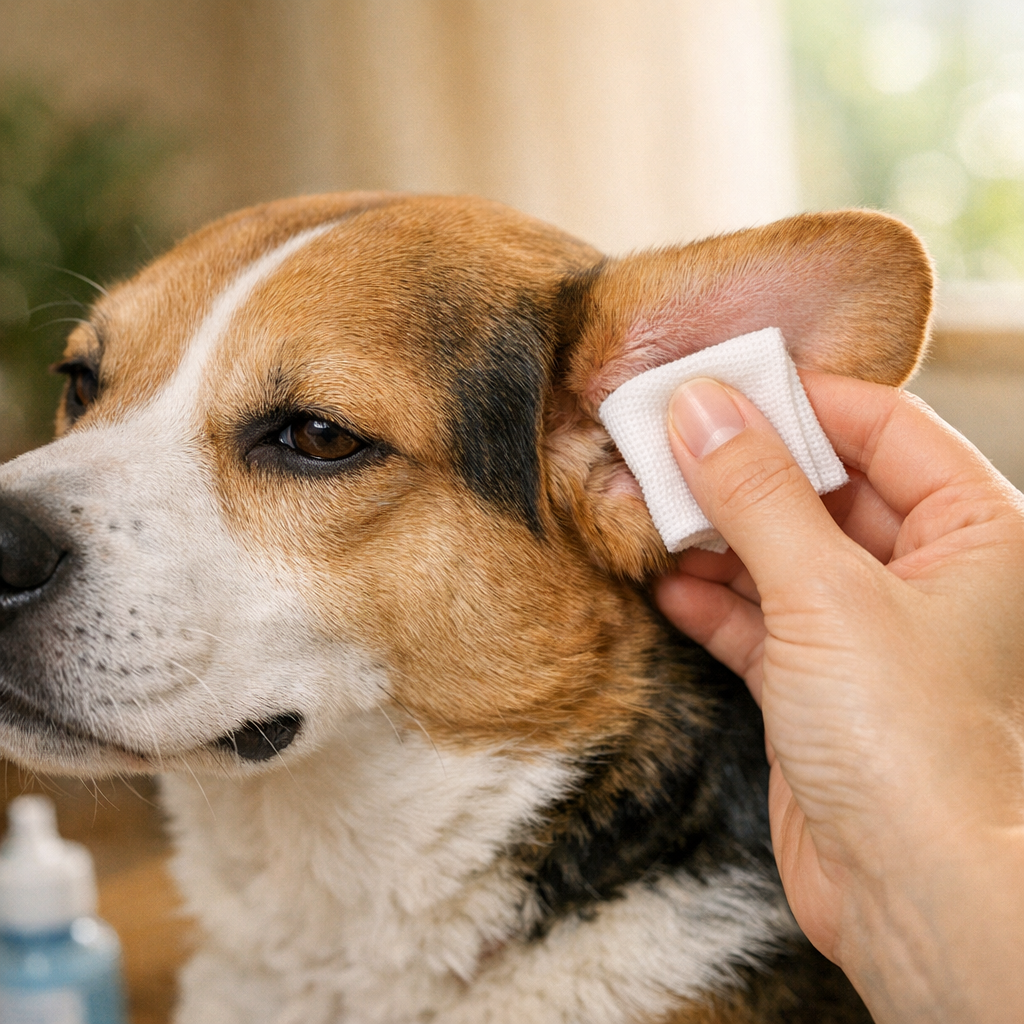
Prevention is always better than searching for a cure. Keeping your dog’s ears dry, especially after monsoon walks or baths, is the best natural defense against yeast growth. Use a soft cotton pad to gently wipe the visible folds of the ear—never stick q-tips or deep instruments into the canal, as this can push debris further in or damage the delicate structures of the inner ear. Furthermore, food allergies are a massive trigger for chronic ear infections. If your dog is constantly dealing with ear issues, consider working with a vet to investigate a hypoallergenic diet. For a structured approach to your pet’s nutritional needs, the free Custom Diet Calculator at Pawsitive Hoomans can help you determine the right balance for your specific breed and activity level.
When to Skip the Home Remedy and Head to the Vet
If you notice discharge that is yellow, brown, or bloody, or if your dog is tilting their head, crying out, or losing balance, do not look for a natural remedy. These are signs of a deep, potentially neurological or middle-ear infection that requires professional medical intervention. Attempting to manage these at home can lead to permanent damage or hearing loss. Veterinary experts are equipped with otoscopes to look deep into the canal, ensuring the eardrum is intact before recommending any specific topical treatment or medication.
Not sure what your pet needs? Use our free tools — Emergency Triage Guide or Custom Diet Calculator.
Consistency is the secret to a happy pet. By maintaining a clean environment, providing a nutritionally balanced diet, and keeping a detailed history of your dog’s health milestones, you ensure they live their best life. Keeping track of recurring symptoms in your Pet Passport allows you to provide your veterinarian with precise data, helping them diagnose potential underlying issues much faster.
Frequently Asked Questions
Can I use warm oil to soothe my dog’s ear pain?
No, you should not pour any oil into an infected ear as it can trap bacteria and make the infection significantly worse. While warm oil might feel soothing temporarily, it does not treat the underlying bacterial or yeast infection and can lead to a buildup of debris that complicates the healing process.
How often should I clean my dog’s ears to prevent infection?
For most dogs, a gentle cleaning with a vet-approved solution once every two weeks is sufficient for maintaining health. If your dog swims frequently or lives in a very humid area, your vet may recommend a more frequent schedule, but always consult them first to ensure you aren’t over-cleaning and stripping the ear of its natural protective oils.
Why does my dog’s ear smell like stinky feet?
A ‘stinky feet’ or yeasty odor is a classic indicator of a yeast infection (Malassezia) in the ear canal. This is common in Indian climates and typically requires a specific antifungal cleaning solution or medication prescribed by a veterinarian to resolve the overgrowth, as regular water or natural oils will not kill the fungus.
What is the best way to clean my Indie dog’s ears at home?
Use a clean gauze or cotton pad moistened with a vet-recommended, non-stinging ear cleaner to gently wipe only the outer visible areas of the ear flap and the entrance to the canal. Never insert objects deep into the canal, as this can cause physical trauma or push dirt deeper, and always reward your dog with a healthy treat afterward to keep the experience positive.
Disclaimer: Pawsitive Hoomans provides information based on general pet care research and advocacy. We are not veterinarians. Always consult with a qualified veterinarian regarding your dog’s specific health concerns, diagnostic needs, or any treatment plans. Never withhold professional veterinary care in favor of home remedies.