
Understanding the Immediate Steps After Losing Your Pet
Losing a beloved companion is perhaps the most heart-wrenching experience a pet parent can face. When you realize your pet has gone missing, panic is a natural response, but staying calm is your best tool for a successful reunion. If you have just realized your companion is gone, take a deep breath and start systematically. For more general advice on responsible guardianship, head over to our dog hub to ensure you are prepared for every aspect of your furry friend’s life. Finding a lost dog in India requires a combination of local community engagement, digital reach, and persistent physical searching.
The first hour is critical. Begin by searching your immediate surroundings, calling their name, and checking the places where they typically hide. Because India is a high-stimulus environment with loud traffic, busy markets, and territorial street dogs, your pet is likely to be frightened and seeking a quiet, sheltered space. Check under parked cars, in building basements, and behind piles of construction materials where a nervous dog might tuck themselves away.
The Pawsitive Hoomans Take
At Pawsitive Hoomans, we believe that rescue and advocacy go hand-in-hand. When we lose a pet, we are reminded of how vulnerable our furry friends truly are in an urban landscape. We strongly advocate for the use of collars with durable, laser-engraved ID tags that list your current phone number. Microchipping is another non-negotiable safety layer for every pet parent. When a lost dog is found by a stranger, these identifiers are often the only thing standing between your pet returning to your arms or becoming another statistic on the street. Never lose hope; many dogs in India are returned to their families thanks to the incredible kindness of our local communities and the power of social media networks.
🐾 Keep a complete health record for your pet with our free Pet Passport. Track vaccinations, weight and behaviour in one place.
Strategies for Finding a Lost Dog in India
Once you have exhausted the immediate area, you must expand your reach. In India, communication often happens through hyper-local channels. Visit your local ‘Kirana’ stores, tea stalls, and security guard posts. Security guards in residential complexes are often the most observant people in the neighborhood and are likely to notice a dog that does not belong. Provide them with a clear, printed photo of your pet and your contact number.
Utilize social media to its fullest potential. Post in local community Facebook groups, WhatsApp resident groups, and city-specific animal welfare pages. When posting, ensure the image is clear, mention the area where the dog was last seen, and include a contact number that is active 24/7. Avoid posting your home address for safety reasons; instead, suggest that people reach out via phone if they spot the animal. If your dog is microchipped, contact the chip provider immediately to ensure your contact details are current.
Engaging the Local Community
One of the most effective ways to find a lost dog in India is to leverage the local feeder network. Community dog feeders are often the eyes and ears of the street. They know every dog in the locality and are the first to spot a newcomer. Connect with local animal welfare NGOs and independent rescuers in your city; they often have WhatsApp groups dedicated to lost and found animals. Providing them with a digital flyer makes it easier for them to circulate your request across their networks.
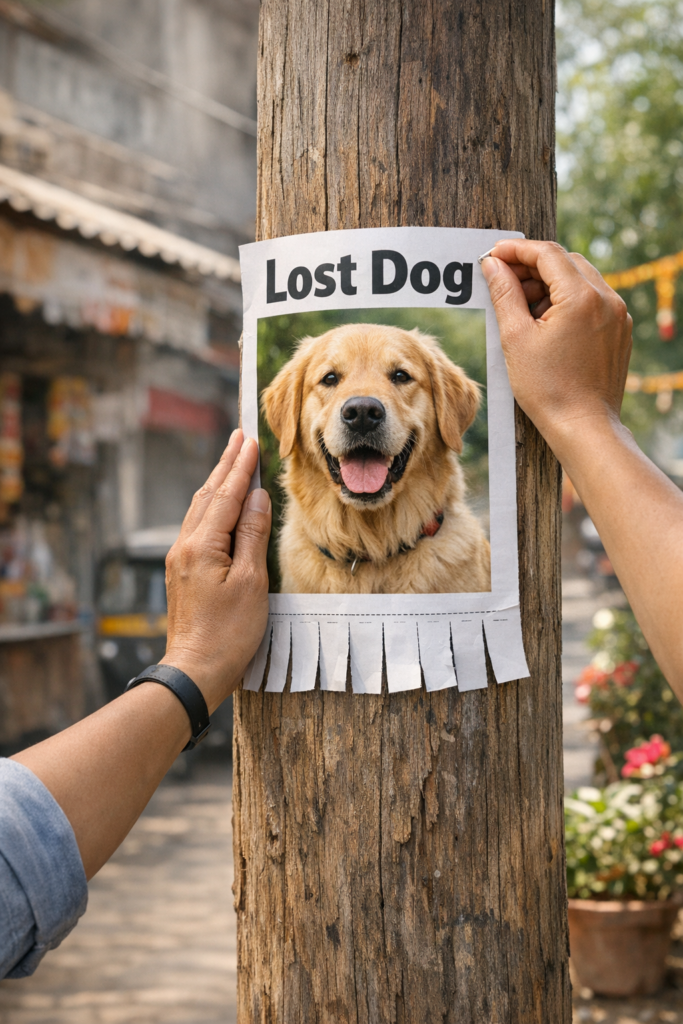
Physical posters are still incredibly relevant in India. Create a poster with a large, high-contrast photo of your dog and bold text. Place these at high-traffic intersections, veterinary clinics, and local parks. Ensure the posters are laminated or placed in plastic covers to protect them from monsoon rains or harsh sunlight. For a comprehensive way to manage your pet’s life, keeping an organized pet passport is essential for quick identification and medical history retrieval.
What to Do When You Spot Your Dog
If you get a lead that someone has spotted your pet, approach the situation with caution. A lost dog, even one that is usually friendly, may be in ‘fight or flight’ mode due to stress. Do not chase the dog, as this will only encourage them to run further. Instead, sit on the ground, use a calm, low voice, and avoid direct eye contact. If you have their favorite treat or a familiar scent like a blanket from home, use that to lure them toward you. If the dog is in a dangerous location, such as near a busy highway, contact local animal rescuers who have the expertise to safely secure a scared animal.
Frequently Asked Questions
What is the best way to alert people in my neighborhood if my dog is lost?
Create a clear, A4-sized poster with a high-quality photo of your dog and stick it at main intersections, local grocery stores, and near gated community entrances. Additionally, share the image in every WhatsApp group you are part of, including your building or sector-specific groups, as word-of-mouth is the fastest way to get information moving in India.
Should I offer a reward for finding my lost dog?
Yes, offering a reasonable reward can incentivize people to keep an eye out for your dog, but be extremely careful of scam calls. Never transfer money to anyone claiming they have your dog until you have physically seen the animal and verified it is yours; scammers often use photos of lost pets to demand money from desperate owners.
How long does it usually take to find a lost dog in an Indian city?
Most lost dogs in India are reunited with their families within 24 to 72 hours if you act quickly and mobilize the local community. Persistence is key, as many dogs stay within a 1-2 kilometer radius of where they were lost, often hiding in bushes or under staircases during the day and moving at night when it is cooler.
Not sure what your pet needs? Use our free tools — Emergency Triage Guide or Custom Diet Calculator.
Disclaimer: The information provided here is for educational purposes only and is not a substitute for professional veterinary or animal behaviourist advice. If your pet has been lost and is found injured, please consult a qualified veterinarian immediately for medical care and assessment.